
 Image 1 of 1
Child & Young Person Support - Deposit
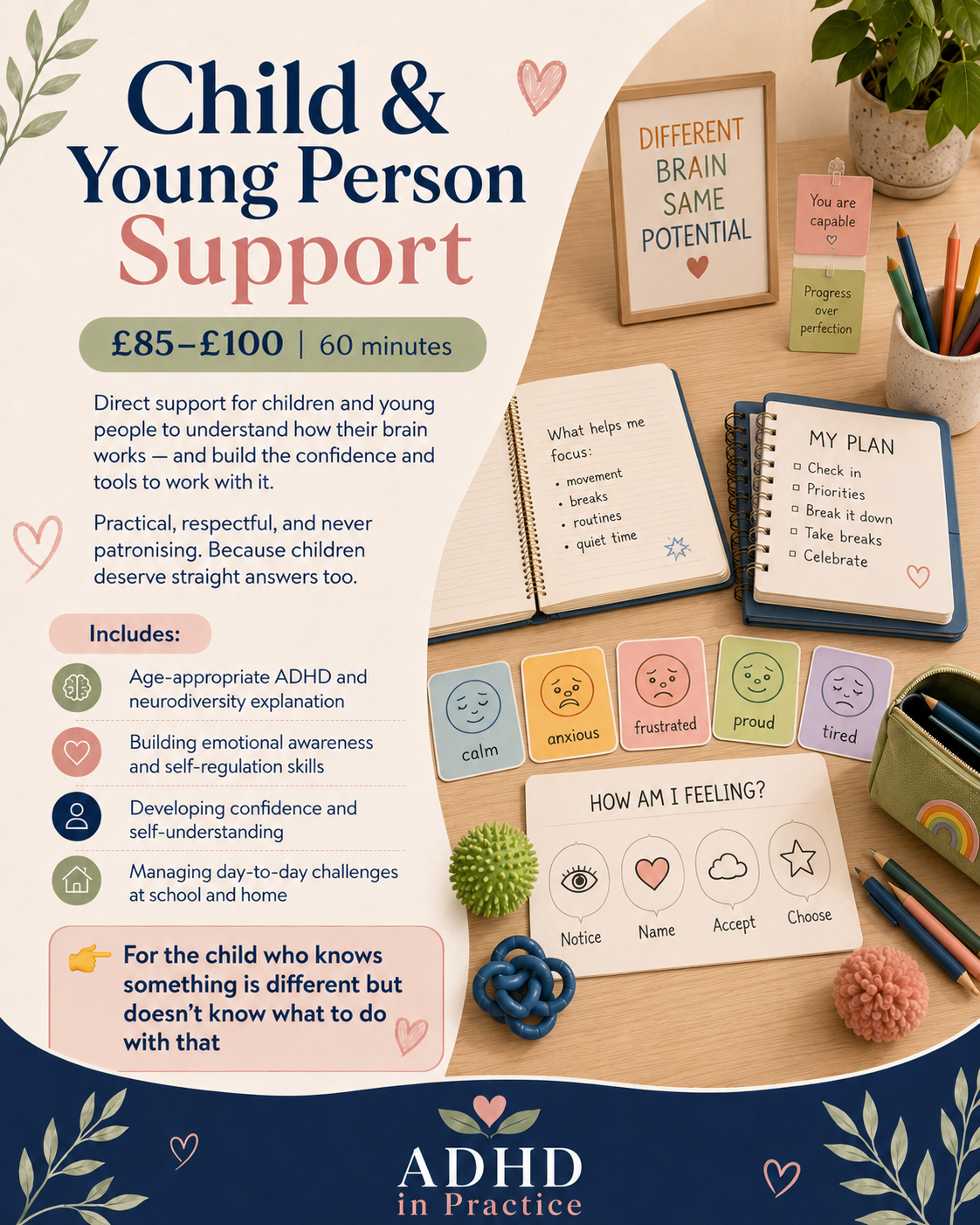
Child & Young Person Support
£85–£100 | 60 minutes
How it works
Booking and payment
A deposit of £85 secures your child’s session.
For many children and young people, this will be the full session price. If, once we start, it becomes clear that your child needs a more tailored or complex level of support, I will explain this clearly and let you know if the session will be charged at £100.
This may apply where I need to review additional background information, adapt the session more carefully, or prepare personalised resources.
If the higher rate applies, only the remaining £15 balance will be due.
No hidden extras. No awkward surprises. Just clear communication before we move forward.
Direct support for children and young people who are trying to understand themselves, their behaviour, their emotions, and why some parts of school or home life feel harder than they seem to for everyone else.
This is practical, respectful support that helps children make sense of how their brain works — without shame, blame, baby talk or patronising nonsense.
Because children often know something feels different.
They may not have the words for it yet.
They may think they are “naughty”, “lazy”, “too sensitive”, “always in trouble” or “just bad at things”.
They are not.
This session helps them begin to understand what is actually going on — and what they can do with that understanding.
This support can help with:
Understanding ADHD, autism, dyslexia, anxiety or neurodiversity in an age-appropriate way
Making sense of big feelings, meltdowns, shutdowns or emotional explosions
Recognising what happens in their body before they feel overwhelmed
Building confidence and self-understanding
Developing practical strategies for school, home, friendships and homework
Understanding why transitions, instructions, waiting, losing, writing or getting started can feel so hard
Learning how to ask for help without feeling embarrassed
Building a simple toolkit they can actually use
What we may cover
Depending on your child’s age and needs, the session may include:
A child-friendly explanation of how their brain works
Emotional awareness activities
Regulation strategies that are realistic, not fluffy
Confidence-building work
“What helps me” planning
School and home survival strategies
Identifying triggers and early warning signs
Simple language your child can use to explain what they need
Practical tools for routines, transitions, homework or friendship difficulties
The approach
This is not a lecture.
It is a calm, supportive conversation using child-friendly language, visuals, examples and practical tools. The aim is to help your child feel understood, not analysed.
They do not need to perform, sit perfectly, give impressive answers or pretend everything is fine.
The session meets them where they are.
Price difference explained
£85 is usually suitable for a straightforward 60-minute session where your child needs general support with understanding ADHD, neurodiversity, emotions, confidence or everyday challenges.
£100 applies when the session needs more preparation, adaptation or complexity, for example:
There are several areas of need involved
Your child needs a highly personalised approach
School reports, parent concerns or background information need reviewing beforehand
The session requires tailored visuals, scripts or follow-up guidance
The situation is more emotionally sensitive or complex
Support needs to link closely with school, SEND provision or existing professional advice
The price will always be agreed before booking, based on what your child needs.
Best for children and young people who:
Know something feels different but do not know how to explain it
Feel frustrated, overwhelmed or misunderstood
Struggle with emotional regulation
Find school or home routines difficult
Lose confidence because they are always being corrected
Need help understanding their ADHD or neurodivergent profile
Need practical tools that feel realistic, not childish
You leave with:
A clearer understanding of what your child is finding difficult
Practical strategies your child can begin using
Language your child can use to describe what helps
A stronger sense of confidence and self-understanding
Ideas for how home and school can support them more effectively
👉 For the child who knows something is different but does not know what to do with that yet.
Child & Young Person Support
£85–£100 | 60 minutes
How it works
Booking and payment
A deposit of £85 secures your child’s session.
For many children and young people, this will be the full session price. If, once we start, it becomes clear that your child needs a more tailored or complex level of support, I will explain this clearly and let you know if the session will be charged at £100.
This may apply where I need to review additional background information, adapt the session more carefully, or prepare personalised resources.
If the higher rate applies, only the remaining £15 balance will be due.
No hidden extras. No awkward surprises. Just clear communication before we move forward.
Direct support for children and young people who are trying to understand themselves, their behaviour, their emotions, and why some parts of school or home life feel harder than they seem to for everyone else.
This is practical, respectful support that helps children make sense of how their brain works — without shame, blame, baby talk or patronising nonsense.
Because children often know something feels different.
They may not have the words for it yet.
They may think they are “naughty”, “lazy”, “too sensitive”, “always in trouble” or “just bad at things”.
They are not.
This session helps them begin to understand what is actually going on — and what they can do with that understanding.
This support can help with:
Understanding ADHD, autism, dyslexia, anxiety or neurodiversity in an age-appropriate way
Making sense of big feelings, meltdowns, shutdowns or emotional explosions
Recognising what happens in their body before they feel overwhelmed
Building confidence and self-understanding
Developing practical strategies for school, home, friendships and homework
Understanding why transitions, instructions, waiting, losing, writing or getting started can feel so hard
Learning how to ask for help without feeling embarrassed
Building a simple toolkit they can actually use
What we may cover
Depending on your child’s age and needs, the session may include:
A child-friendly explanation of how their brain works
Emotional awareness activities
Regulation strategies that are realistic, not fluffy
Confidence-building work
“What helps me” planning
School and home survival strategies
Identifying triggers and early warning signs
Simple language your child can use to explain what they need
Practical tools for routines, transitions, homework or friendship difficulties
The approach
This is not a lecture.
It is a calm, supportive conversation using child-friendly language, visuals, examples and practical tools. The aim is to help your child feel understood, not analysed.
They do not need to perform, sit perfectly, give impressive answers or pretend everything is fine.
The session meets them where they are.
Price difference explained
£85 is usually suitable for a straightforward 60-minute session where your child needs general support with understanding ADHD, neurodiversity, emotions, confidence or everyday challenges.
£100 applies when the session needs more preparation, adaptation or complexity, for example:
There are several areas of need involved
Your child needs a highly personalised approach
School reports, parent concerns or background information need reviewing beforehand
The session requires tailored visuals, scripts or follow-up guidance
The situation is more emotionally sensitive or complex
Support needs to link closely with school, SEND provision or existing professional advice
The price will always be agreed before booking, based on what your child needs.
Best for children and young people who:
Know something feels different but do not know how to explain it
Feel frustrated, overwhelmed or misunderstood
Struggle with emotional regulation
Find school or home routines difficult
Lose confidence because they are always being corrected
Need help understanding their ADHD or neurodivergent profile
Need practical tools that feel realistic, not childish
You leave with:
A clearer understanding of what your child is finding difficult
Practical strategies your child can begin using
Language your child can use to describe what helps
A stronger sense of confidence and self-understanding
Ideas for how home and school can support them more effectively
👉 For the child who knows something is different but does not know what to do with that yet.