
The sock, the look and the meltdown: hidden ADHD triggers parents never see
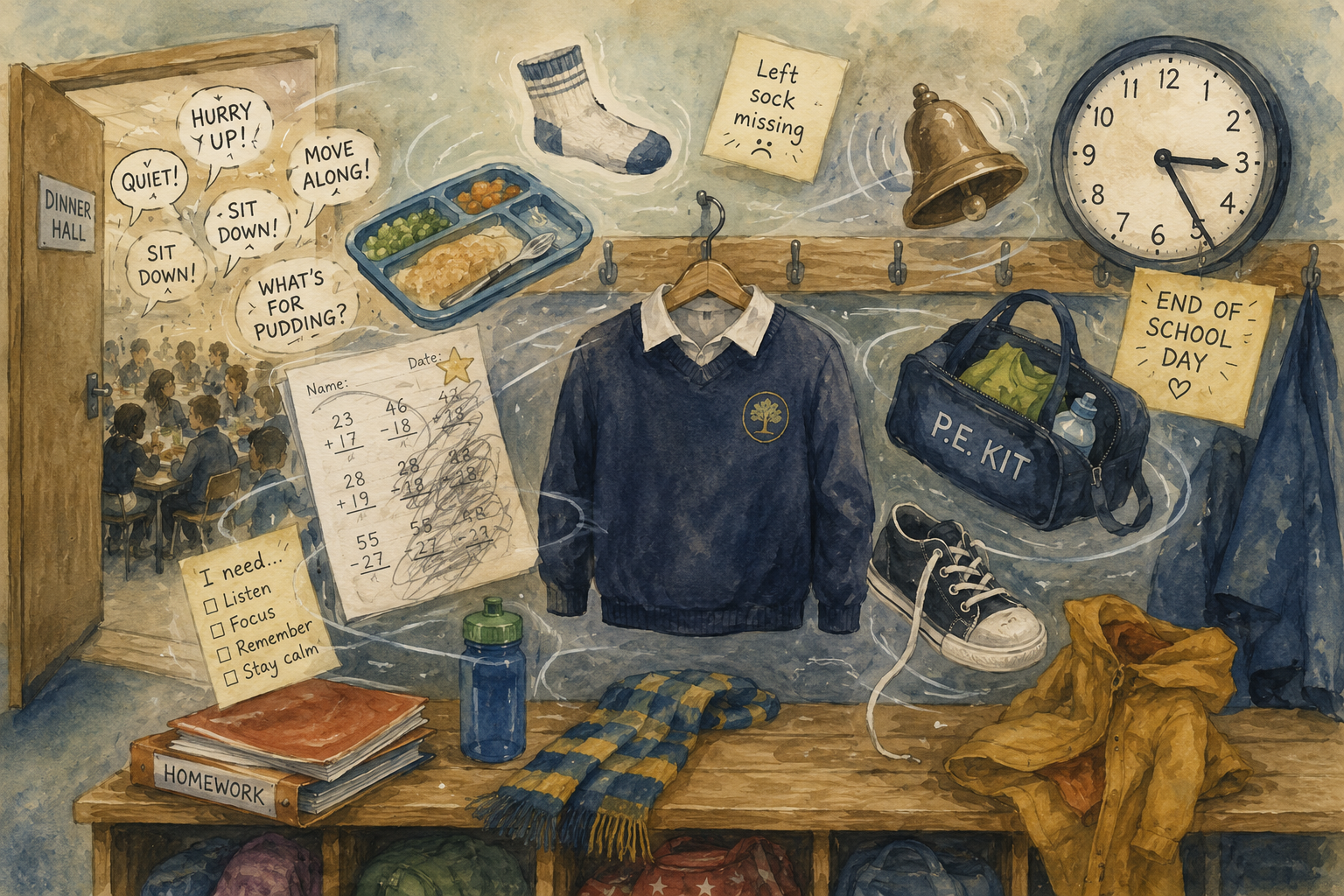
Life in school
Most parents only see the explosion.
They do not see the look in the lunch line.
They do not hear the raised voice from the PE teacher because their child took too long getting changed.
They do not see the missing left sock, the wet sleeve, the chair scraped too loudly, the friend who moved away, the worksheet that looked simple to everyone else but felt like climbing Everest with a pencil.
They do not see the moment their child swallowed their tears because the dinner hall was too loud and everyone else seemed fine.
They do not see the six tiny humiliations before 11am.
So when the child walks through the door and falls apart over the wrong cup, the parent thinks:
What on earth has happened?
And the honest answer is:
Everything happened. Just not in front of you.
ADHD does not always get worse suddenly
It often gets worse quietly.
A child may hold it together all day at school. They may smile. They may comply. They may answer the register, line up, sit on the carpet, copy the date, survive PE, survive lunch, survive the noise, survive the waiting, survive being corrected, survive the transitions.
Then they come home and collapse.
Not because home is the problem.
Because home is safe enough for the mask to fall off.
That is the bit parents are rarely told.
Your child may not be “saving their worst behaviour for you”.
They may be saving their real self for you. Free Meltdown Decoder available.
The hidden triggers are often tiny
This is where we need to become detectives.
Not detectives who interrogate.
Not detectives who stand at the door asking, “What happened today? Tell me exactly. Why are you like this?”
That does not work.
The ADHD brain under stress does not always have a neat verbal report ready for your convenience.
Sometimes the best thing you can do is sit back and let it unravel.
Watch.
Notice.
Look for the pattern behind the performance.
Because the trigger may not be obvious.
It might be:
a look from another child
being hurried in the cloakroom
losing equipment
not understanding the first instruction
being corrected in front of others
sitting too close to someone noisy
the smell of the dining hall
trying to get changed after PE
not finding the left sock
one bare foot in one trainer and shame rising faster than logic
being told, “Everyone else is ready”
the quiet panic of being last
None of these things look dramatic on paper.
But for an ADHD child, they can be expensive.
Every one costs regulation.
Every one takes from a limited daily supply.
The controversial bit
Sometimes the adults around the child do not notice because the child is not causing a problem for them.
This is uncomfortable, but it is true.
A child can be struggling and still look compliant.
A child can be overwhelmed and still be quiet.
A child can be masking beautifully while slowly running out of fuel.
Then the child gets home and the parent gets the bill.
School may say:
“She was fine all day.”
And they may be telling the truth.
But “fine” can mean:
“She did not disrupt the lesson.”
It does not always mean:
“She was emotionally okay.”
That distinction matters.
This is why behaviour charts often miss the point
A behaviour chart records what the adult saw.
It rarely records what the child survived.
It records the shouting.
It does not record the sock.
It records the refusal.
It does not record the shame.
It records the meltdown.
It does not record the six-hour build-up.
This is why we need to stop asking only:
“What behaviour did we see?”
And start asking:
“What demand, sensory load, social moment, transition or embarrassment happened before the behaviour?”
That is where the useful information lives.
Parents: become curious, not furious
When your child falls apart after school, try not to rush straight into correction.
Yes, boundaries matter.
Yes, hurtful behaviour needs repairing.
But in the first moment, your job is not to cross-examine.
Your job is to regulate the room.
Later, when the nervous system has landed, you can gently wonder aloud:
“I’m wondering if something made today feel too much.”
“I noticed PE days are harder after school.”
“I wonder if lunch was noisy today.”
“I wonder if getting changed felt rushed.”
No interrogation.
No courtroom drama.
Just breadcrumbs.
Children often reveal the truth sideways.
In the bath.
In the car.
At bedtime.
While eating toast.
Three hours after you stopped asking.
The question is not “Why did they explode?”
The better question is:
“What did they have to hold in before they exploded?”
That is the shift.
That is where parents stop blaming themselves.
That is where we stop labelling children as manipulative, dramatic, lazy or rude.
That is where we start seeing the child underneath the behaviour.
Because ADHD is not just about attention.
It is about regulation.
And some children spend all day using every ounce of regulation they have just to look okay.
Then they come home.
And finally, they cannot hold it anymore.
Not because they are bad.
Because they are done.
