

School Says They're Fine...
Home tells a very different story.
When school says your child is coping, but every afternoon ends in tears, meltdowns or complete exhaustion, it can leave you questioning everything. This page explains why it happens, what schools may not be seeing and how you can help both home and school understand the whole child.
School sees a child who's coping.
You see the tears, the meltdowns, the homework battles and the exhaustion that follows.
If you've ever wondered how both can be true, you're about to discover what many schools unintentionally miss.
↓ Discover what's really happening
* School says they are fine *
* School says they are fine *
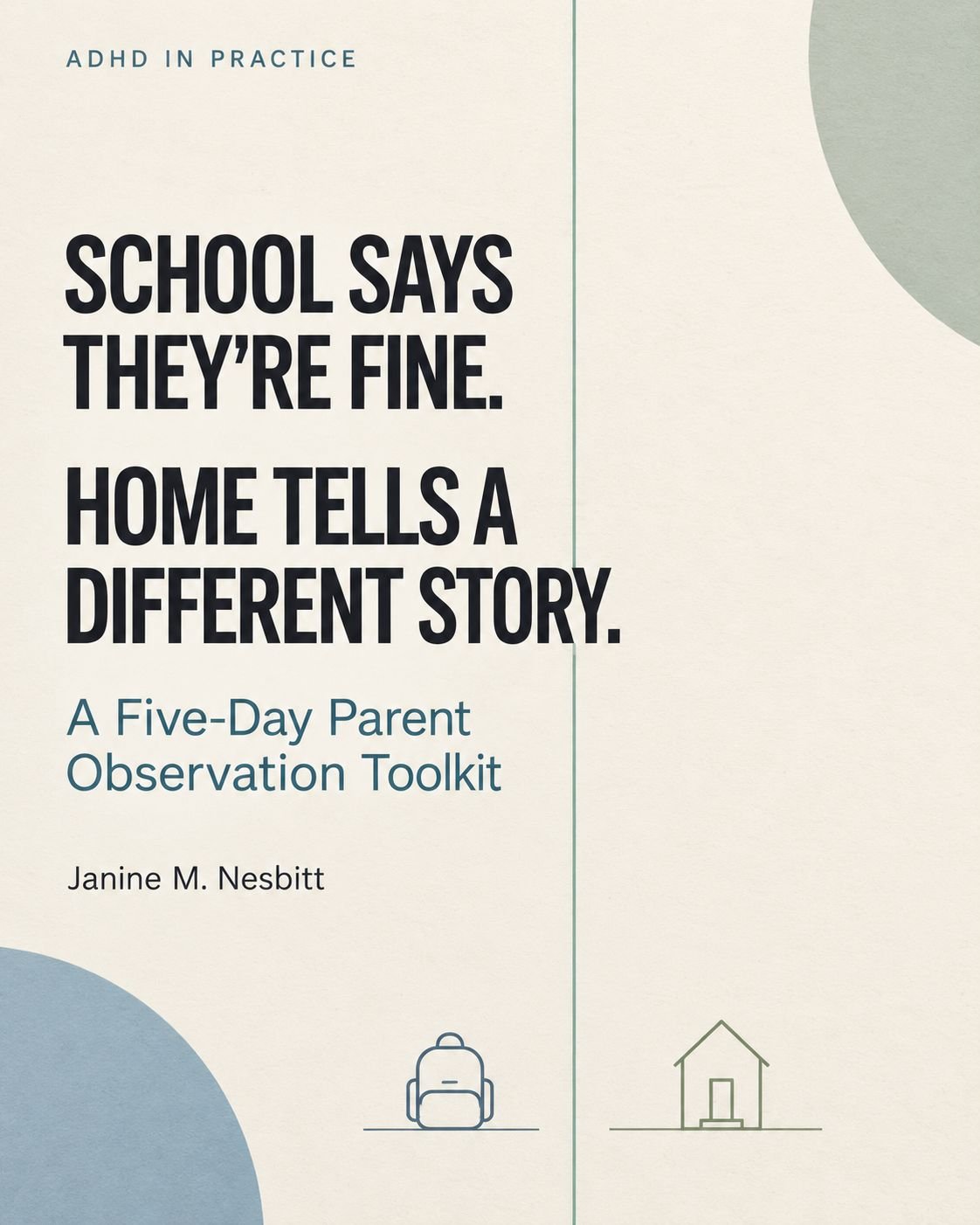
School says your child is settled, coping or doing fine.
But at home, you are seeing exhaustion, tears, shutdowns, irritability, anxiety, explosive behaviour or a child who needs hours to recover from the school day.
Both experiences can be real.
This free 20-page ADHD and SEND parent toolkit helps you move beyond vague descriptions and record what is happening in a calm, useful and manageable way.
Across five school days, you will record brief observations about:
What happened before, during and after the difficulty.
What your child said or communicated.
How long recovery took.
What became difficult at home.
What support your child needed.
What appeared to help.
What was different on easier days.
The toolkit then helps you look across the five days, identify recurring patterns and prepare a clearer conversation with school.
By the end of the toolkit, you will have:
A completed five-day observation record.
Two or three clear examples to share.
A one-page summary of your concerns.
Your child’s views, where they are comfortable sharing them.
Questions to ask their teacher or SENCo.
A ready-to-personalise school email.
A record of any agreed actions and review arrangements.
You do not need a diagnosis to use this toolkit.
You also do not need to prove that school is wrong. The purpose is to help home and school build a fuller picture of your child’s needs and decide what should happen next.
Format: Free 20-page digital Word document
Suitable for: Parents and carers of children with ADHD, autism or other SEND, including children without a diagnosis
UK focus: School guidance and terminology relate primarily to England
Free toolkit - just download and use straight away
School says your child is settled and coping, but at home you see exhaustion, tears, shutdowns, anxiety, anger or after-school meltdowns.
This free ADHD and SEND parent toolkit helps you record five school days, identify recu
Two Stories. One Child.
"If I had a class full of Janines, my life would be bliss."
That was the message my teachers shared with my parents.
At home, the message was very different.
"You're too emotional."
For years, those two versions of me existed side by side.
Today, after more than 34 years working in education, I hear parents telling me the same story.
School sees a child who is polite, engaged and coping.
Home sees the tears, the meltdowns, the homework battles and the complete exhaustion that follows.
If you've ever wondered how both can be true, you're not imagining it.
Neither home nor school is seeing the whole picture.
Let's look beneath the behaviour.

Why This Matters
When parents hear "We don't see that here," it can feel incredibly isolating.
You begin questioning yourself.
Am I expecting too much?
Am I doing something wrong?
Is this just bad parenting?
Should I be stricter?
Kinder?
More consistent?
Less emotional?
Many parents carry that guilt for years.
The reality is that the answer is often far more complex—and far more hopeful—than simply trying harder.
Understanding what happens beneath the behaviour changes everything.

Why Can Home And School Look So Different?
Children don't leave their ADHD, autism or SEND needs at the school gates.
What changes is the environment.
School has routines.
Predictability.
Structure.
Adults directing the day.
Friends watching.
Expectations to meet.
Many children work incredibly hard simply to get through the school day without drawing attention to themselves.
By the time they reach home, there is nothing left in the tank.
Home is where they finally feel safe enough to stop holding everything together.
What looks like "bad behaviour" is often the emotional cost of coping all day.
What School May Be Seeing
A child who:
• follows instructions
• works quietly
• tries their best
• keeps worries inside
• rarely asks for help
• appears to be coping
From a classroom perspective, there may be very little to cause concern.

What You May Be Seeing at Home
By the time your child walks through the front door, it can feel as though all of the effort they put into getting through the school day has finally caught up with them.
The smallest thing can trigger a huge reaction. Homework becomes a battle before it's even started. Choosing what's for dinner feels impossible. A simple request to put their shoes away ends in tears, shouting or complete shutdown.
Some children slam doors. Others retreat to their bedroom and don't want to talk. Some seem angry at everyone, while others simply curl up on the sofa, exhausted and unable to cope with one more demand.
Parents often tell me:
"The second they get home, everything falls apart."
If that sentence feels painfully familiar, you're not imagining it—and you're certainly not alone.

The Missing Piece
School is seeing the child survive the day.
Home is seeing what surviving the day has cost.
Once families understand this, everything begins to make more sense.
Instead of asking,
"What's wrong with my child?"
they begin asking,
"What is my child finding so difficult that this is the only way they can show me?"
That single shift changes conversations, relationships and the support children receive.

Questions Worth Asking
Instead of asking:
"Why are they behaving like this?"
Try asking:
• What happened before this?
• How much emotional effort has today required?
• Are they overwhelmed rather than unwilling?
• Are they communicating something they don't yet have words for?
What happens before break?
Does my child ask for help?
How do they cope with transitions?
Do they mask?
Have you noticed friendships?
Do they appear tired by the afternoon?
Sometimes the answers are far more revealing than the behaviour itself.

What You Can Do Next
If this page feels painfully familiar, you don't have to work it out on your own.
Explore:
Or, if you simply want someone to help you make sense of your own child's story, book a free 15-minute introductory call.
Because once you understand what's happening beneath the behaviour, you stop fighting your child—and start understanding them.

“School isn’t getting the best version of your child. Neither are you. School is getting the child who’s trying desperately to hold everything together. Home gets the child who’s finally safe enough to stop.”
“Perhaps school isn’t seeing a different child. Perhaps they’re seeing a child who’s trying so hard to hold everything together that only the people who love them most ever see the cost.”
A calm, no-pressure conversation giving you time to explain what is happening and work out what your next step could be.
This call is for parents, grandparents and carers of children with any diagnosed or suspected SEND—not only ADHD.
Your child may be experiencing difficulties connected with autism, dyslexia, dyscalculia, anxiety, sensory needs, communication, learning, school attendance, emotional regulation or executive functioning. They may have several overlapping needs, or no diagnosis at all.
Children’s needs rarely arrive in neat, separate boxes. ADHD may overlap with autism, dyslexia, anxiety or sensory differences. A dyslexic child may also experience frustration, emotional overwhelm, shutdowns or meltdowns when learning demands repeatedly exceed the support available.
This is not a sales call. There is no hard pitch, no awkward pressure and absolutely no “book before midnight” nonsense.
During the call, we can talk about your main concern which could be:
what is worrying you most right now;
what is happening at home, at school or both;
the difficulties or patterns you have noticed;
whether learning needs, masking, anxiety, sensory overload or emotional regulation may be part of the picture;
questions you may need to ask school, your GP, CAMHS or an assessment service;
which SEND, NHS or school-support pathway may be worth exploring;
whether ADHD in Practice is the right fit for your family.
Your child may already have a diagnosis, be waiting for an assessment or simply have you thinking, “Something isn’t adding up.”
You do not need to arrive knowing the correct terminology. You do not need to decide whether it is ADHD, autism, dyslexia or something else before speaking to me.
Just tell me what is happening. We can begin there.
BOOK A FREE 15-MINUTE CALL
Popular
You have to start somewhere.
Book that call, let’s start by talking it through.
Free Guides
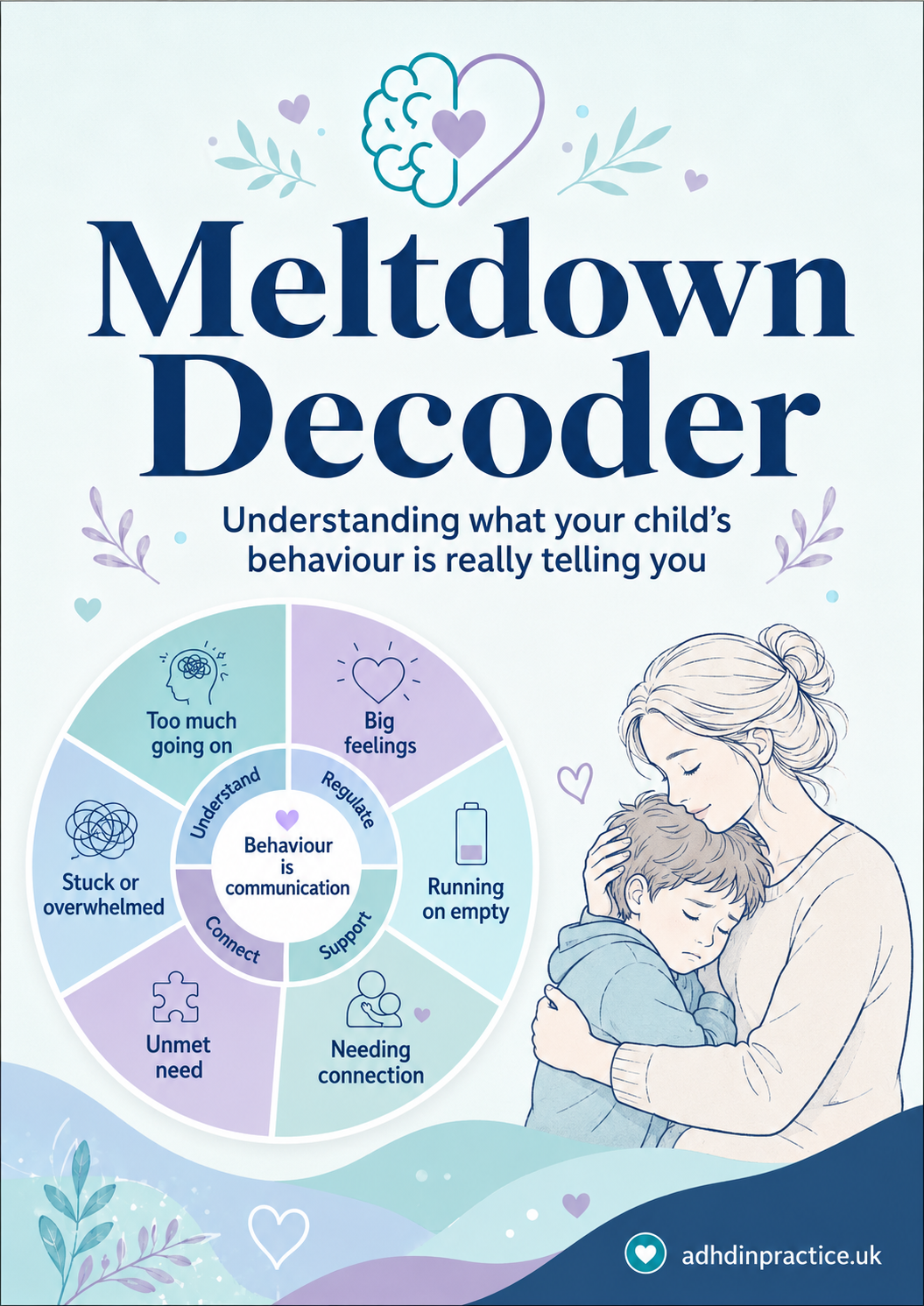
Work out whether your child’s behaviour is demand overload, sensory overwhelm, transition panic, masking collapse, hunger, tiredness, anxiety or executive function overload — before everyone ends up crying in the hallway.
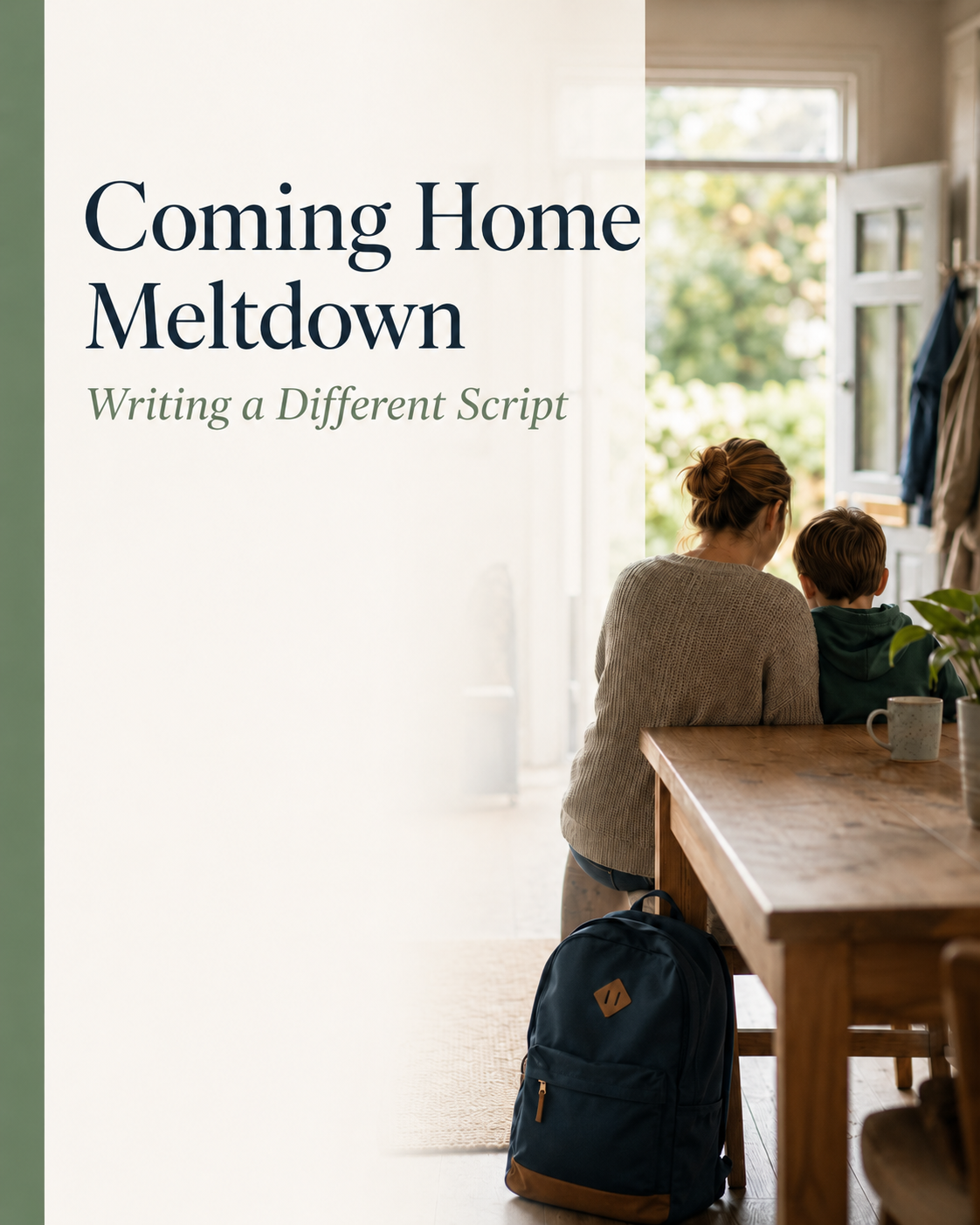
A reset plan for parents whose child holds it together at school and explodes at home. If your child walks out of school looking “fine” and falls apart over shoes, snacks, homework, noise, questions or the wrong cup, this guide gives you a calm starting point for the first 30 minutes after school.
Inside, you’ll get: what to do before pickup.
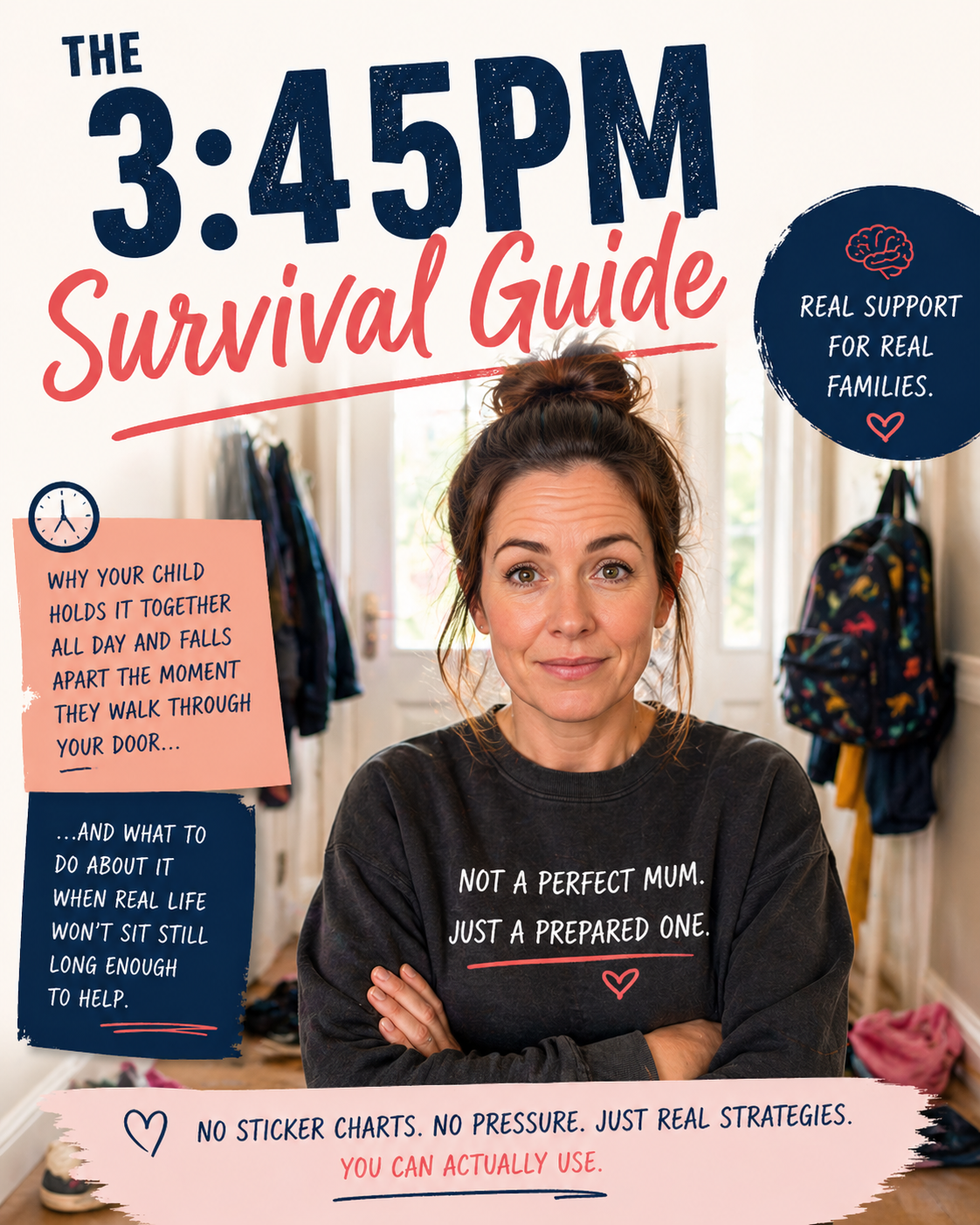
The 3:45pm Survival Guide is a practical, no-nonsense resource for parents of children with ADHD who seem to hold it together all day at school and then fall apart the moment they get home.

Continue Exploring
Every child has a different story. These guides will help you understand the next piece of the puzzle.
Where would you like to go next?
Download the free Parent Pattern Snapshot - to record the patterns that matter
Download the We’ll monitor it