
Something Feels Different: A Parent’s First Guide to Emerging Needs

£0.00

Something feels different, but you cannot quite put it into words. Perhaps communication is tricky, everyday routines feel overwhelming, or nursery has raised a concern. You do not need all the answers—or a paperwork folder with its own postcode—to take the next step.

This warm, practical guide helps you explore your child’s strengths and emerging needs without jumping to a diagnosis. Written for parents and carers in England, it covers communication, attention, play, sensory experiences and everyday development.

Inside, you’ll find:

  • Reassurance and clear guidance on what to notice.

  • Examples that help you put concerns into words.

  • Conversation prompts for nursery and health appointments.

  • An explanation of local authority differences and England’s national SEND Code of Practice.

  • A printable strengths-and-needs profile.

  • A simple observation sheet.

  • An appointment preparation worksheet.

  • Links to trusted information and further support.

Suitable for families with children from birth to starting school, including those exploring possible ADHD, autism/ASC or other special educational needs and disabilities.

Format: 16-page downloadable PDF.
Please note: This guide provides general information. It is not a diagnostic tool or personalised medical or legal advice.

Still unsure what to do next?
If you've spotted a pattern but don't know what to ask school for, book a Focused Parent Session.

£135 | 60 minutes | one issue | practical next steps.

Inside the guide · Early years

What might be worth noticing?

Children rarely give us a neat explanation of what feels difficult. Sometimes the clues are in everyday moments: getting dressed, joining a game, finding the right words or coping with noise.

01 · COMMUNICATION

Finding the words

How does your child show you what they need? What happens when they're tired, frustrated or unsure?

02 · SENSORY EXPERIENCES

When the world feels too much

Notice responses to clothing, sounds, food, busy places and changes in familiar surroundings.

03 · PLAY AND CONNECTION

Joining in their own way

How does your child play, explore, connect and communicate? Notice strengths as well as difficulties.

04 · EVERYDAY ROUTINES

The tricky transitions

Bedtime, leaving home, nursery drop-off and moving between activities can reveal where support may help.

You don't need all the answers. This free guide helps you gather observations and prepare for useful conversations with nursery, a health visitor or another professional. You do not need a diagnosis to ask questions.

More free help · ADHD in Practice

Where would you like to go next?

One concern can lead to a dozen questions. You don't need the entire library. Start with what matches your child's needs now.

Parent Pattern Snapshot cover

Free · First observations

Parent Pattern Snapshot

See what keeps happening, what's getting harder and what seems to help.

Explore this resource
ADHD in Children Aged 5–7

Free · Early primary

ADHD in Children Aged 5–7

Understanding what may change as nursery gives way to school and new expectations.

Explore this resource
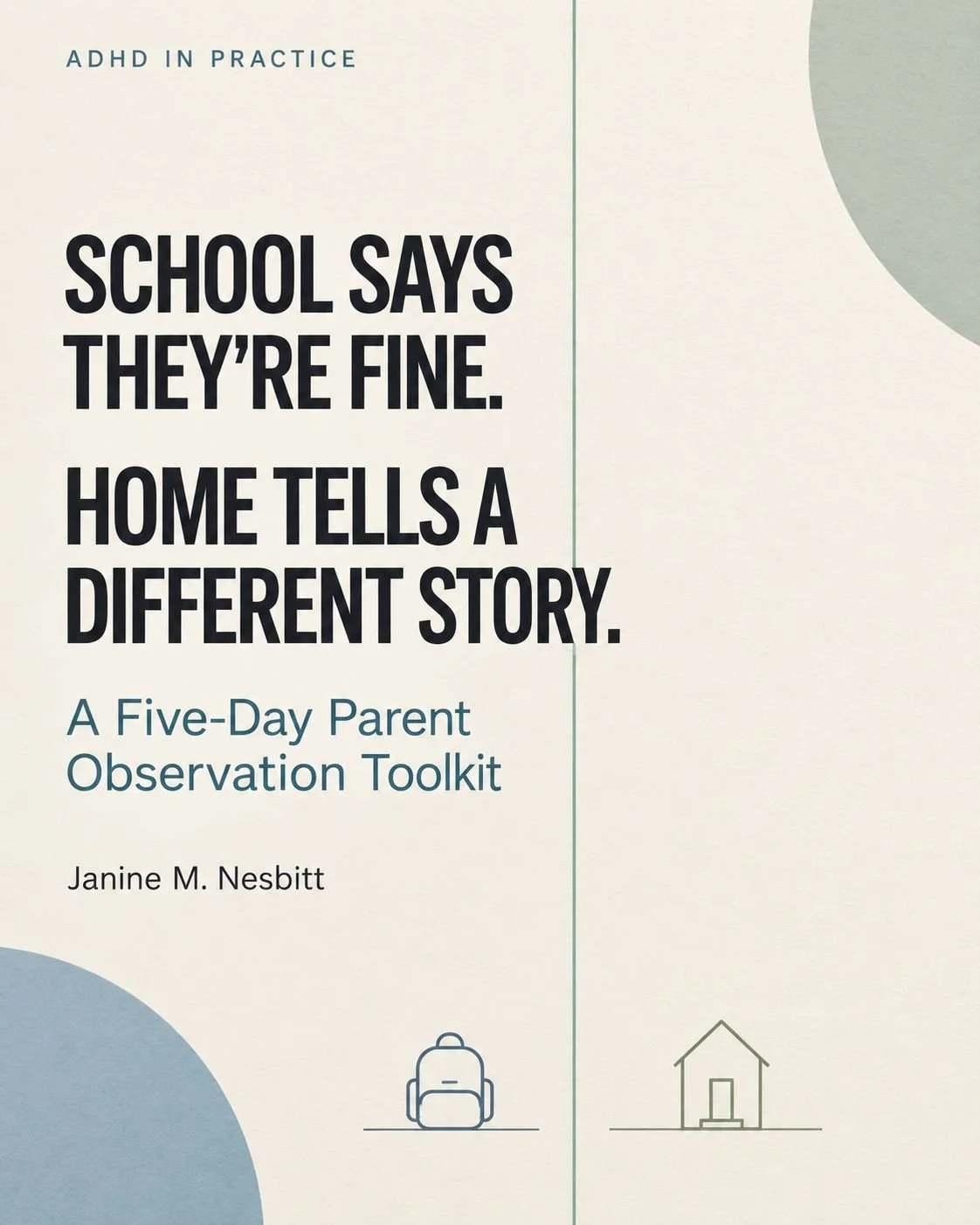
School Says They're Fine cover

Free · Home and school

School Says They're Fine

When school sees one version of your child and home sees another. Includes a five-day observation tool.

Explore this resource

Still unsure where to begin?

A free 15-minute introductory call can help you decide on a useful next step.

Book a free introductory call