
 Image 1 of 1
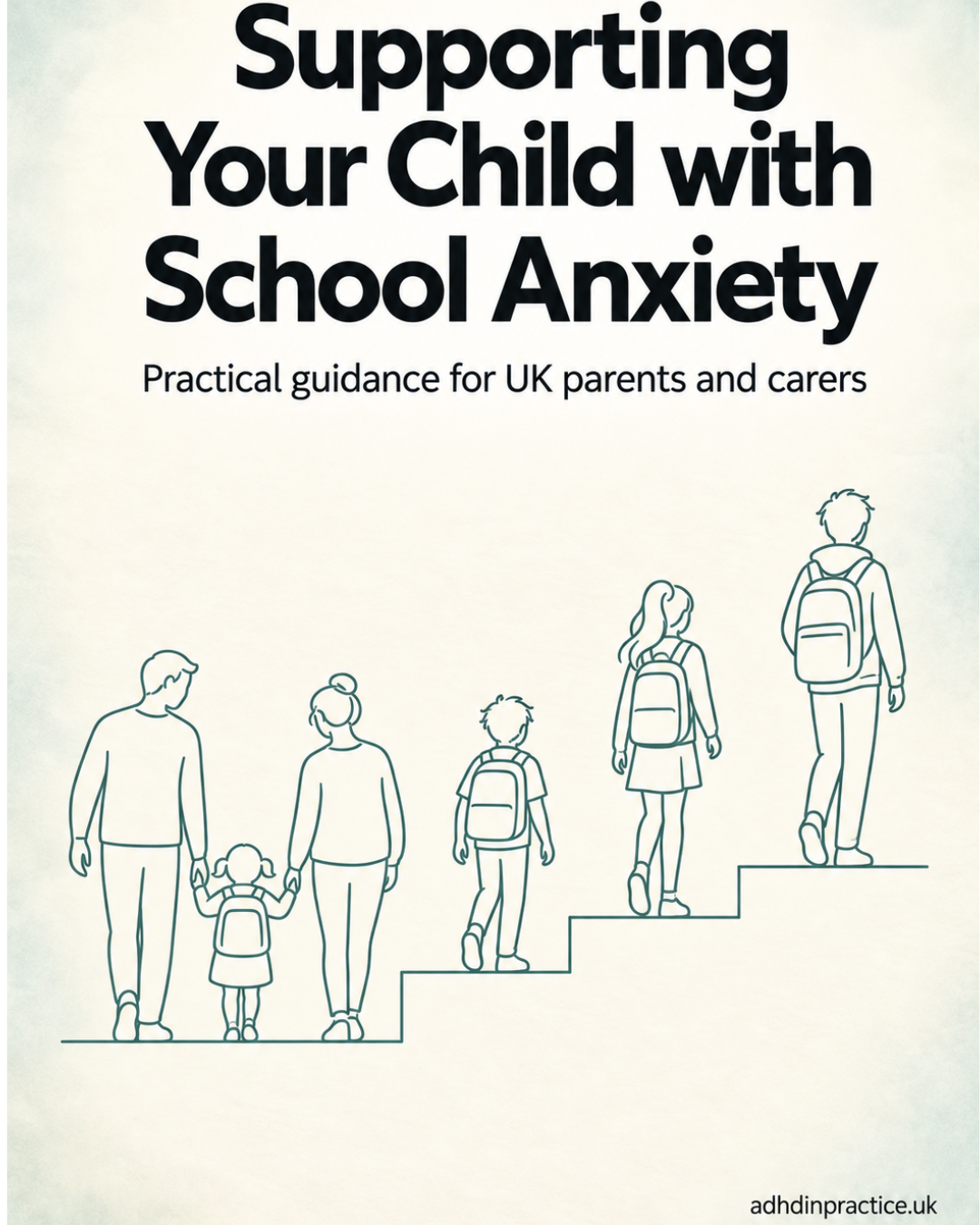
I have created another free guide for parents/c arers to download and use. When a child is struggling to attend school, the problem is rarely solved by simply telling them they must go in.
School anxiety can appear as tears, anger, shutdown, physical symptoms, sleepless nights, difficult mornings or complete refusal. Some children manage to enter school and appear fine, only to fall apart when they return home.
This practical guide helps you look beyond the behaviour, identify what may be making school feel unsafe or overwhelming and take clear, manageable action.
You will find:
Signs of school anxiety across different ages
Possible reasons behind distress and non-attendance
Questions to help you identify patterns and pressure points
Practical steps for difficult mornings and recovery after school
Ways to listen without turning every conversation into an interrogation
Reasonable adjustments that may reduce anxiety in school
Parent-teacher conversation scripts
Questions to ask the teacher, SENCo or pastoral team
Space to record concerns, agreed actions and review dates
Guidance on what to do when support is vague or progress stalls
Describe what is happening clearly
Separate anxiety from assumptions about behaviour
Gather useful information from home and school
Prepare for a constructive school meeting
Ask for specific support rather than being told to wait and see
Keep your child’s experience at the centre of decisions
This guide is for parents and carers of children and young people experiencing anxiety connected with school, including those with ADHD, autism, SEND, EBSA or no diagnosis at all.
You do not need to wait for a diagnosis before discussing your child’s needs or asking school what support can be put in place.
This is practical general guidance, not individual legal advice, a diagnosis or a treatment plan. The conversation scripts are examples to adapt to your child, school and circumstances.
Education systems and legal duties differ across the UK. Year groups and statutory references within the guide follow England unless stated otherwise.
Download the guide, choose the section that matches what is happening now and begin with one action. You do not need to solve everything in one meeting.
I have created another free guide for parents/c arers to download and use. When a child is struggling to attend school, the problem is rarely solved by simply telling them they must go in.
School anxiety can appear as tears, anger, shutdown, physical symptoms, sleepless nights, difficult mornings or complete refusal. Some children manage to enter school and appear fine, only to fall apart when they return home.
This practical guide helps you look beyond the behaviour, identify what may be making school feel unsafe or overwhelming and take clear, manageable action.
You will find:
Signs of school anxiety across different ages
Possible reasons behind distress and non-attendance
Questions to help you identify patterns and pressure points
Practical steps for difficult mornings and recovery after school
Ways to listen without turning every conversation into an interrogation
Reasonable adjustments that may reduce anxiety in school
Parent-teacher conversation scripts
Questions to ask the teacher, SENCo or pastoral team
Space to record concerns, agreed actions and review dates
Guidance on what to do when support is vague or progress stalls
Describe what is happening clearly
Separate anxiety from assumptions about behaviour
Gather useful information from home and school
Prepare for a constructive school meeting
Ask for specific support rather than being told to wait and see
Keep your child’s experience at the centre of decisions
This guide is for parents and carers of children and young people experiencing anxiety connected with school, including those with ADHD, autism, SEND, EBSA or no diagnosis at all.
You do not need to wait for a diagnosis before discussing your child’s needs or asking school what support can be put in place.
This is practical general guidance, not individual legal advice, a diagnosis or a treatment plan. The conversation scripts are examples to adapt to your child, school and circumstances.
Education systems and legal duties differ across the UK. Year groups and statutory references within the guide follow England unless stated otherwise.
Download the guide, choose the section that matches what is happening now and begin with one action. You do not need to solve everything in one meeting.