
 Image 1 of 1
Most transition advice stops at the school gate in September. The real test of Year 7 usually comes later.
In my years as a SENCo, the worried phone calls rarely came in the first week. They came in October. By then the novelty had worn off, the equipment had gone missing, the friendships had reshuffled, and a child who had coped in September was running on empty.
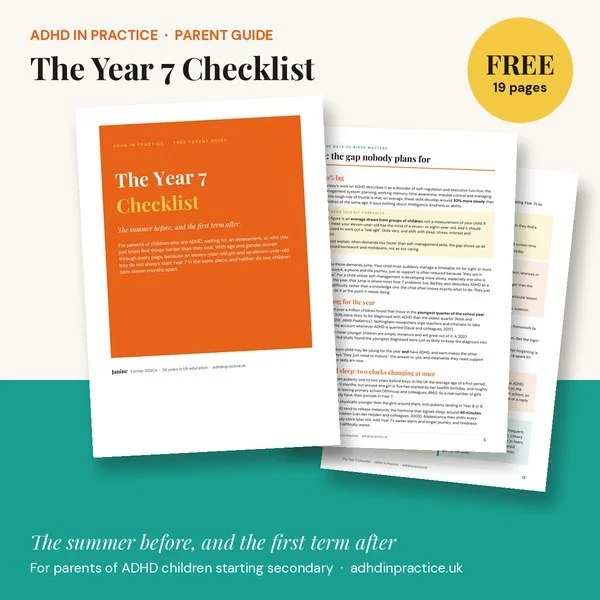
This free checklist is for parents of children who are ADHD, waiting for an assessment, or who you just know find things harder than they look. You don’t need a diagnosis to use it.
What’s inside
The research, briefly: what actually happens to children in Year 7, and why autumn is the term to watch.
Part One, the summer before Year 7: ten checklists covering:
the Year 6 handover and the questions to ask the SENCo
the one-page profile, the journey, kit and the “launch pad”
puberty and privacy, sleep, phones and group chats, friendships
Part Two, the autumn term: September to Christmas, phase by phase. Each phase covers what to watch, what not to panic about, what to write down, and when to contact school.
A short email script for the first equipment detention.
The Green, Amber, Red end-of-term check, including the things that should never wait for a review.
Age and gender run through every page. A summer-born child and a September-born child do not start Year 7 in the same place, and ADHD often shows up differently, and gets noticed differently, in girls and boys. Every section has an Age lens and a Gender lens. They are there to widen what you look for, not to put your child in a box.
It is grounded in UK research and written for the English school system. It’s practical and honest, with no fluff.
It’s free because nobody should have to pay to find out what to look for.
Want the “what do I actually do about it” as well? My book, The First Six Weeks of Year 7, goes deeper, with scripts and a full printable toolkit.