
 Image 1 of 1
The first few weeks of Year 7 can look deceptively calm from the outside.
A child may get through the school day, remember enough of the timetable, and appear to settle, while home tells a very different story.
They may be more tired, more irritable, quieter, harder to get out of the door, increasingly anxious on Sunday evenings, struggling with organisation, friendship changes or after-school collapse.
The difficulty for parents is knowing what is simply part of settling in, what is becoming a pattern, and when it is time to ask for more support.
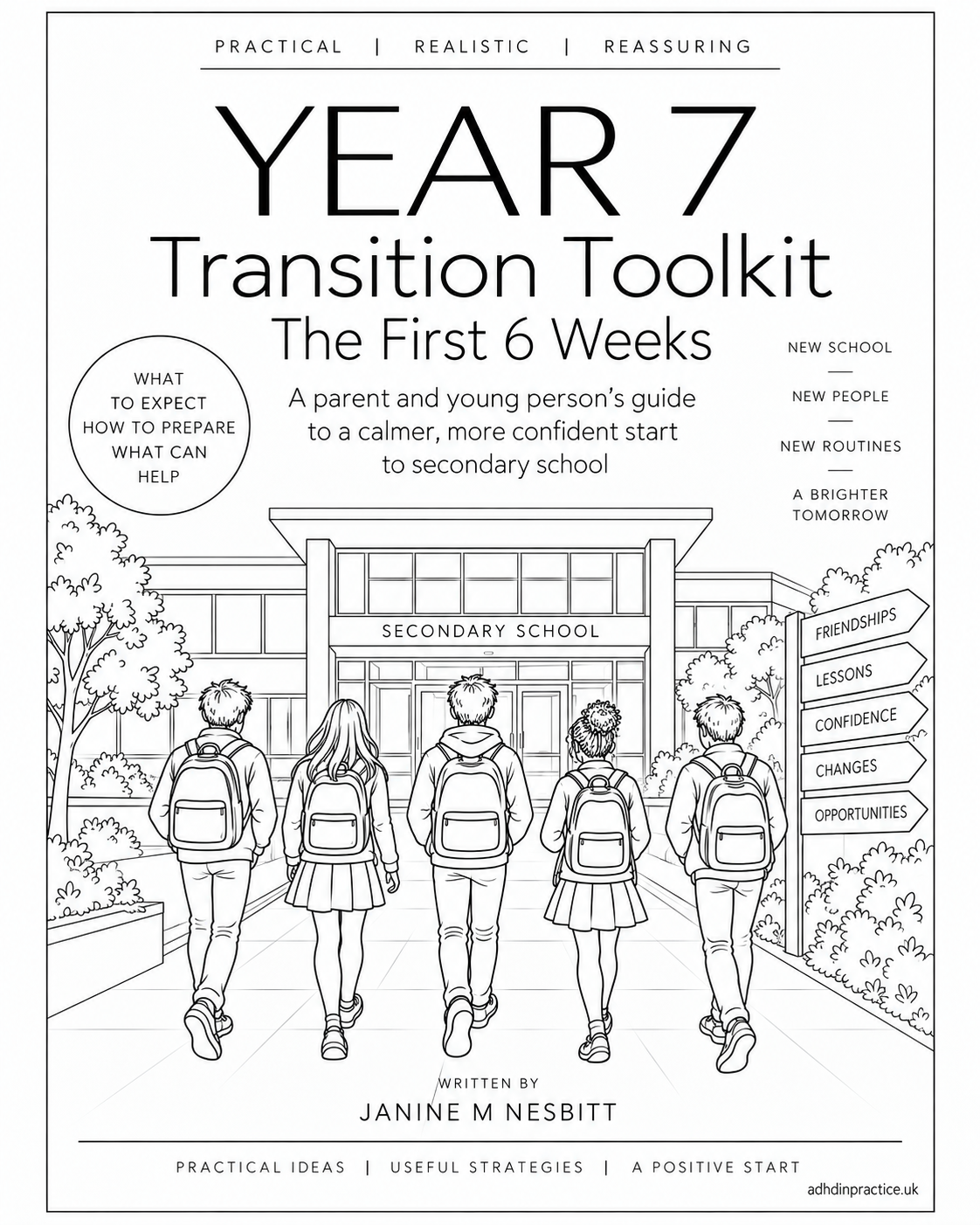
The Year 7 Transition Toolkit: The First 6 Weeks is designed to help you do exactly that.
It is a practical companion resource containing nine printable tools and ten ready-to-use scripts, each designed to help you notice patterns, record what is changing, prepare for conversations with school and make clearer decisions about what may need attention.
Inside the toolkit you will find:
a six-week transition tracker covering sleep, mood, mornings, evenings, friendships and schoolwork
a Parent Pattern Snapshot to turn vague concerns into clearer evidence
an after-school collapse tracker to help identify what your child needs in the first hour home
a morning difficulty tracker to spot patterns over time rather than judging one difficult day in isolation
a friendship and social load check to help notice changes in names, seating, lunch arrangements and group-chat activity
questions that work better than “How was school?”
a school-meeting preparation sheet to help you organise what you are seeing, what has already been tried and what you need to ask for
a green, amber and red six-week review to help you judge whether things are improving, holding steady or becoming more concerning
a comparison sheet for different presentations of anxiety, including distress that is obvious and distress that is much easier to miss
The toolkit also includes ten adaptable parent scripts for situations such as:
“School says they’re fine.”
Repeated forgotten equipment.
Increasing detentions.
Requesting SENCo support.
Emerging school refusal.
Talking to your child about what you are noticing.
Making first contact with school.
Putting verbal agreements into writing.
Responding when concerns are minimised.
Asking for helpful strategies to be written into a support plan.
Each tool includes a worked example so you are not staring at a blank page wondering what to write.
This is not a diagnostic resource and it is not designed to make every Year 7 difficulty look like a crisis.
It is designed to help parents notice earlier, record more clearly and respond more confidently.
Parents of children who have recently started Year 7 and are beginning to notice changes in mood, energy, friendships, organisation, school attendance, anxiety or behaviour at home.
A formal diagnosis is not required. Just look at what id happening and action the support.
The first few weeks of Year 7 can look deceptively calm from the outside.
A child may get through the school day, remember enough of the timetable, and appear to settle, while home tells a very different story.
They may be more tired, more irritable, quieter, harder to get out of the door, increasingly anxious on Sunday evenings, struggling with organisation, friendship changes or after-school collapse.
The difficulty for parents is knowing what is simply part of settling in, what is becoming a pattern, and when it is time to ask for more support.
The Year 7 Transition Toolkit: The First 6 Weeks is designed to help you do exactly that.
It is a practical companion resource containing nine printable tools and ten ready-to-use scripts, each designed to help you notice patterns, record what is changing, prepare for conversations with school and make clearer decisions about what may need attention.
Inside the toolkit you will find:
a six-week transition tracker covering sleep, mood, mornings, evenings, friendships and schoolwork
a Parent Pattern Snapshot to turn vague concerns into clearer evidence
an after-school collapse tracker to help identify what your child needs in the first hour home
a morning difficulty tracker to spot patterns over time rather than judging one difficult day in isolation
a friendship and social load check to help notice changes in names, seating, lunch arrangements and group-chat activity
questions that work better than “How was school?”
a school-meeting preparation sheet to help you organise what you are seeing, what has already been tried and what you need to ask for
a green, amber and red six-week review to help you judge whether things are improving, holding steady or becoming more concerning
a comparison sheet for different presentations of anxiety, including distress that is obvious and distress that is much easier to miss
The toolkit also includes ten adaptable parent scripts for situations such as:
“School says they’re fine.”
Repeated forgotten equipment.
Increasing detentions.
Requesting SENCo support.
Emerging school refusal.
Talking to your child about what you are noticing.
Making first contact with school.
Putting verbal agreements into writing.
Responding when concerns are minimised.
Asking for helpful strategies to be written into a support plan.
Each tool includes a worked example so you are not staring at a blank page wondering what to write.
This is not a diagnostic resource and it is not designed to make every Year 7 difficulty look like a crisis.
It is designed to help parents notice earlier, record more clearly and respond more confidently.
Parents of children who have recently started Year 7 and are beginning to notice changes in mood, energy, friendships, organisation, school attendance, anxiety or behaviour at home.
A formal diagnosis is not required. Just look at what id happening and action the support.