When friendships get complicated, feelings get big, and you don't know what to do next.
A FREE 21-page friendship and feelings guide for girls aged 10–13
One day, they're best friends. The next day, someone isn't speaking, the group chat goes quiet, or she's left out at lunchtime.
For some girls, particularly those with ADHD, friendship difficulties can feel overwhelming.
What looks like a small disagreement to an adult can leave a girl questioning herself, replaying conversations, worrying about rejection or dreading school the next morning.
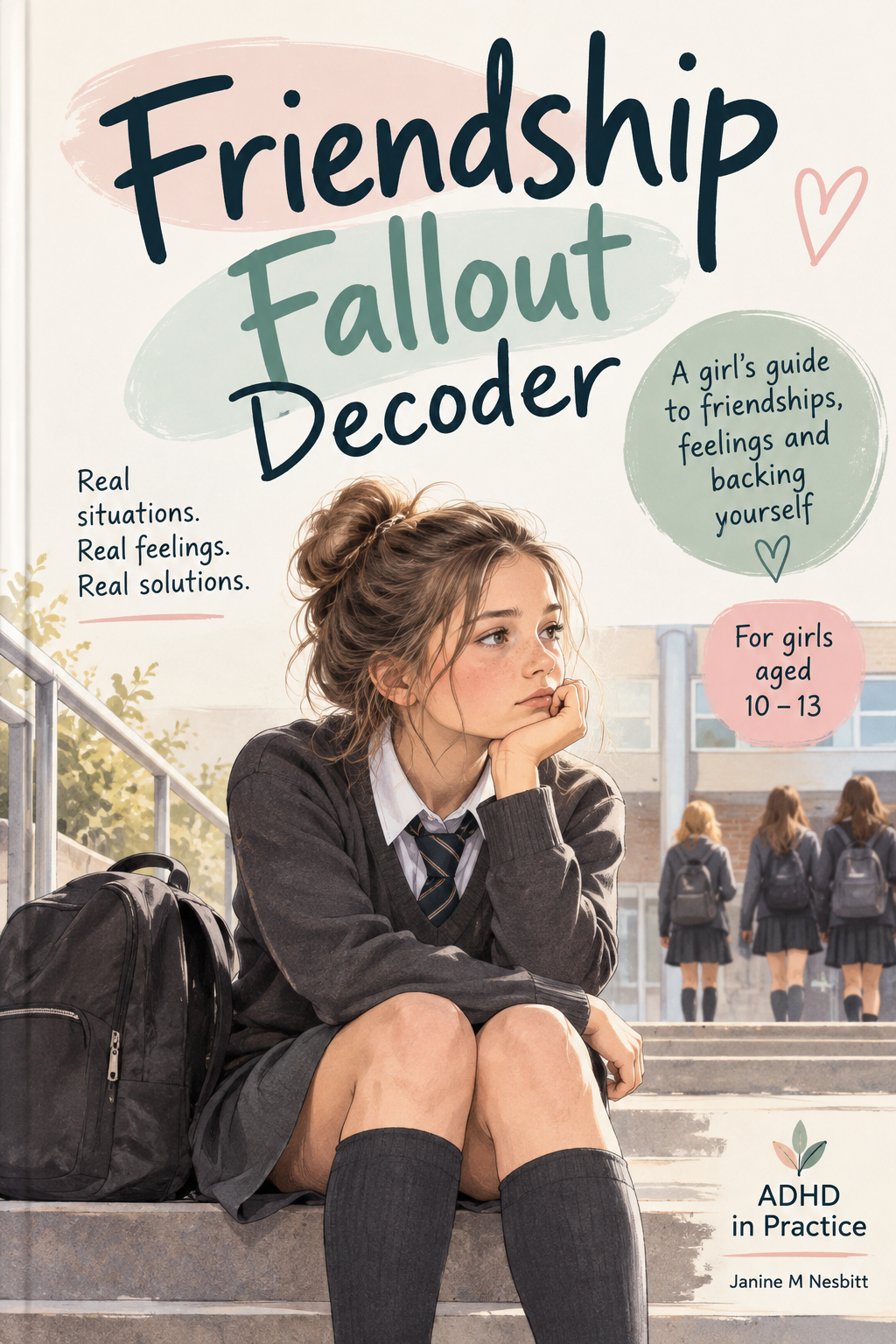
The Friendship Fallout Decoder helps girls make sense of what happened, understand how they feel and work out what to do next.
Created by Janine M Nesbitt, an experienced SEND specialist and former SENCo with over 34 years in education, this practical, reassuring guide combines relatable friendship situations, emotional literacy activities and straightforward strategies that girls can use in everyday life.
What's inside this free guide?
Across 21 thoughtfully designed pages, girls can explore:
Friendship fallouts: Understanding disagreements, misunderstandings and changing friendships.
Big feelings: Recognising disappointment, jealousy, anger, embarrassment and rejection.
Facts or worries? Learning to separate what actually happened from what they think might have happened.
Group chats and social pressures: Navigating messages, exclusion and the feeling of being left out.
Healthy friendships and boundaries: Understanding kindness, respect and when a friendship doesn't feel right.
Finding the right words: Practical phrases for difficult conversations, asking questions and repairing friendships.
When to ask for help: Recognising bullying, repeated exclusion or situations that feel unsafe.
Five ready-to-use scripts: Helping girls reach out to a trusted adult when it feels difficult to talk about what is happening.
There is also guidance to help parents and carers respond with understanding rather than rushing to fix everything.
Who is it for?
This guide is designed for girls aged 10–13, particularly those who:
Find friendships confusing or emotionally exhausting.
Worry about being left out or losing friends.
Replay conversations and wonder what they've done wrong.
Struggle to explain how they feel.
Find it difficult to speak up or set boundaries.
Need reassurance that they are not alone.
It may be particularly helpful for girls with ADHD, but a diagnosis isn't needed. Friendship difficulties and big emotions can affect anyone.
Why I've made it free
Friendships are an important part of growing up. They help children develop confidence, identity and a sense of belonging.
But when friendships become difficult, children don't always have the words or emotional tools to explain what they're experiencing.
After more than 34 years working in education, I believe girls deserve practical, age-appropriate support that helps them feel heard, understood and more confident.
Parents deserve that support too.
That's why I've made this comprehensive 21-page guide available completely free.
Because every girl deserves to feel that she belongs, without having to change who she is.
Download your free copy
21 pages | Printable PDF | Ages 10–13 | Completely FREE
A guide girls can explore independently, share with a trusted adult or work through together with a parent or carer.
If you need more help see below.