
ADHD Guides and Toolkits for UK Parents
Practical ADHD and SEND resources to help you understand behaviour, support emotional regulation, prepare for school conversations and navigate diagnosis or assessment.
Choose the issue that feels most relevant to your family right now.
Free guides

A practical UK checklist to help parents gather clear, real-life evidence before a school meeting, referral or ADHD assessment. Record patterns, impact, support needs and what helps across home, school and daily life. This is not a symptom quiz and cannot diagnose ADHD.
What to do while the diagnosis takes its sweet time — practical steps for getting your child support now, label or no label.
Right now, well over 800,000 people in England are waiting for an NHS ADHD assessment. Children's waits typically run from six months to three years; for adults it can stretch to two, five, even ten years in some areas. Somewhere in that number is you, checking the post and your phone what number are you now? chasing the SENCO, googling symptoms at 11pm, and being told to "wait and see."
Here's the thing nobody tells you: your child doesn't need a diagnosis to get support. They need it today, and the label if and when it arrives can catch up later.
What's inside
How to get your child support at home and at school before any diagnosis exists label or no label
What "Right to Choose" is, and how it can shorten the wait
Scripts for talking to schools, GPs, and SENCOs without a diagnosis in hand
How to build a paper trail that actually helps your case
What changes once the assessment happens and what stays the same either way
A reminder, in writing, that you're not overreacting and you're not alone
Who it's for
Parents and carers in the UK who suspect ADHD in their child (or themselves), who've been referred or are about to be, and who are tired of being told there's nothing to do until the letter arrives.
Credibility line
Written by ADHD in Practice Janine Nesbitt honest, neuroaffirming support for ADHD families, without the jargon or the guilt.
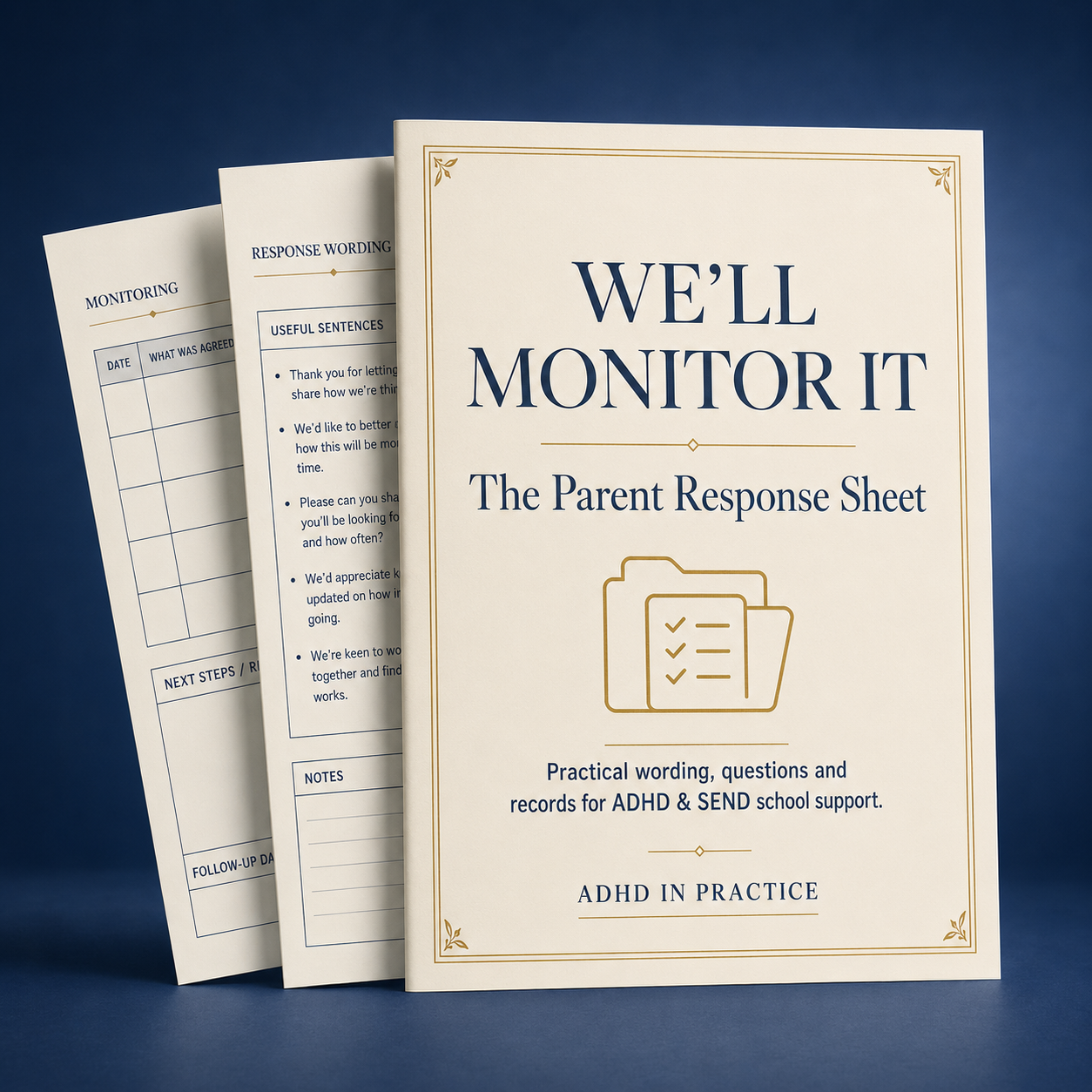
Has school said, “We’ll monitor it,” without explaining what will be monitored, what support will happen or when anyone will review it?
The free “We’ll Monitor It” Parent Response Sheet helps UK parents, grandparents and carers turn a vague promise into a practical, reviewable plan.
Created for families navigating ADHD, autism, dyslexia, dyscalculia, anxiety, sensory needs, emotional regulation, attendance difficulties and wider SEND concerns.
The resource includes:
a school-meeting preparation sheet;
questions to ask before the meeting ends;
an actions and responsibilities record;
space to record support and adjustments;
a review-date planner;
child-voice prompts;
home and school evidence logs;
follow-up email wording;
guidance about what to do if concerns continue.
Your child does not need a diagnosis before you can raise concerns or ask school to respond to identified needs.
Free download • UK-focused • Practical and easy to use

The exact words to use when you walk into that meeting, so you leave with a plan instead of a "we'll monitor it."
You've got the diagnosis. Now you need the school to actually do something with it. This is the word-for-word script for the support meeting: what to say, what to ask for, and how to handle "he seems fine in class" without losing your thread or your nerve.
Free example.
This guide is written for UK parents navigating the NHS ADHD assessment pathway. Everything in here is grounded in UK government guidance, the SEND Code of Practice 2015, and the Children and Families Act 2014.
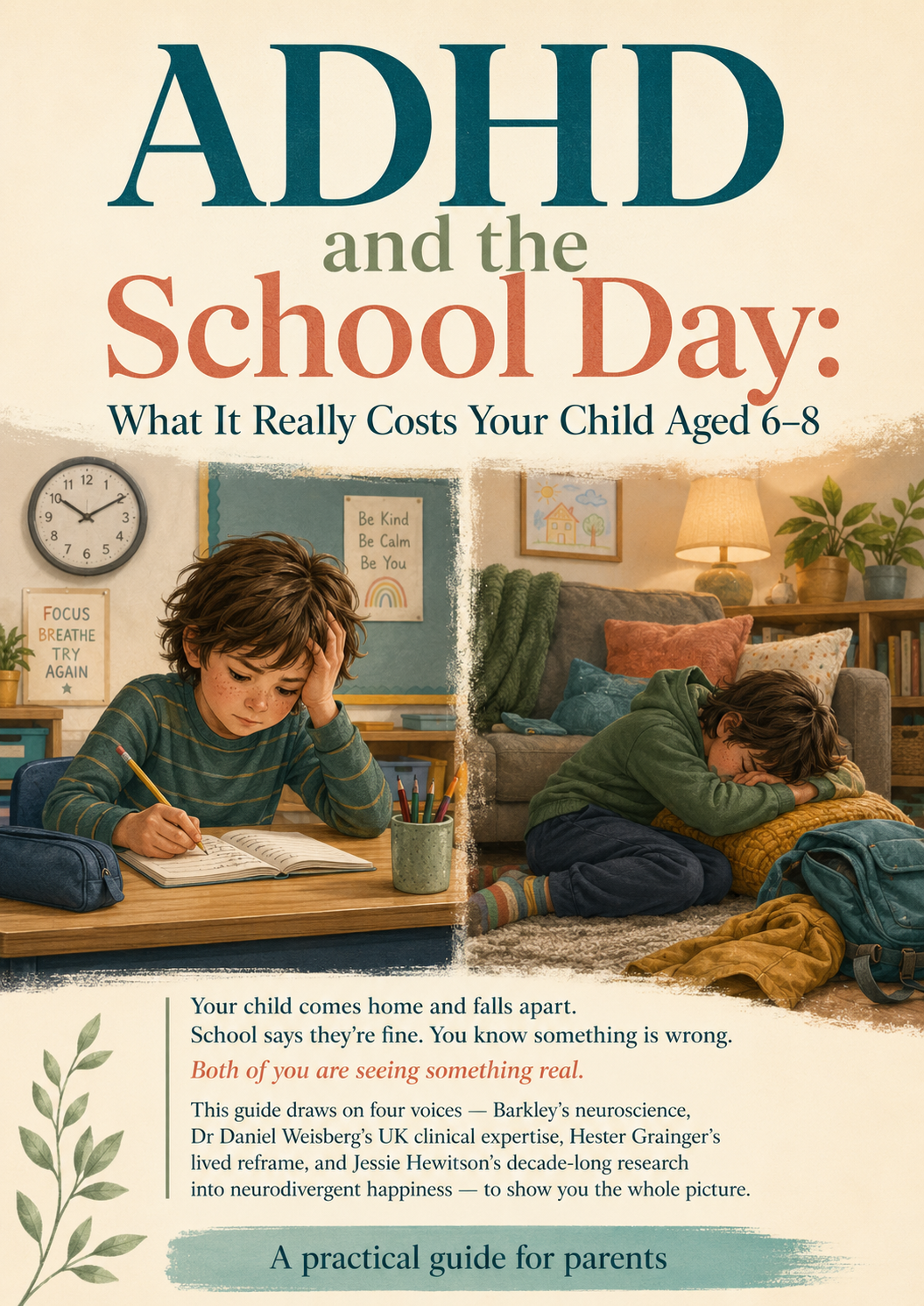
ADHD and the School Day: What It Really Costs Your Child Aged 6–8 Your child comes home and falls apart. School says they're fine. You know something is wrong. Both of you are seeing something real. This guide draws on four voices —
Barkley's neuroscience, Dr Daniel Weisberg's UK clinical expertise, Hester Grainger's lived experience.
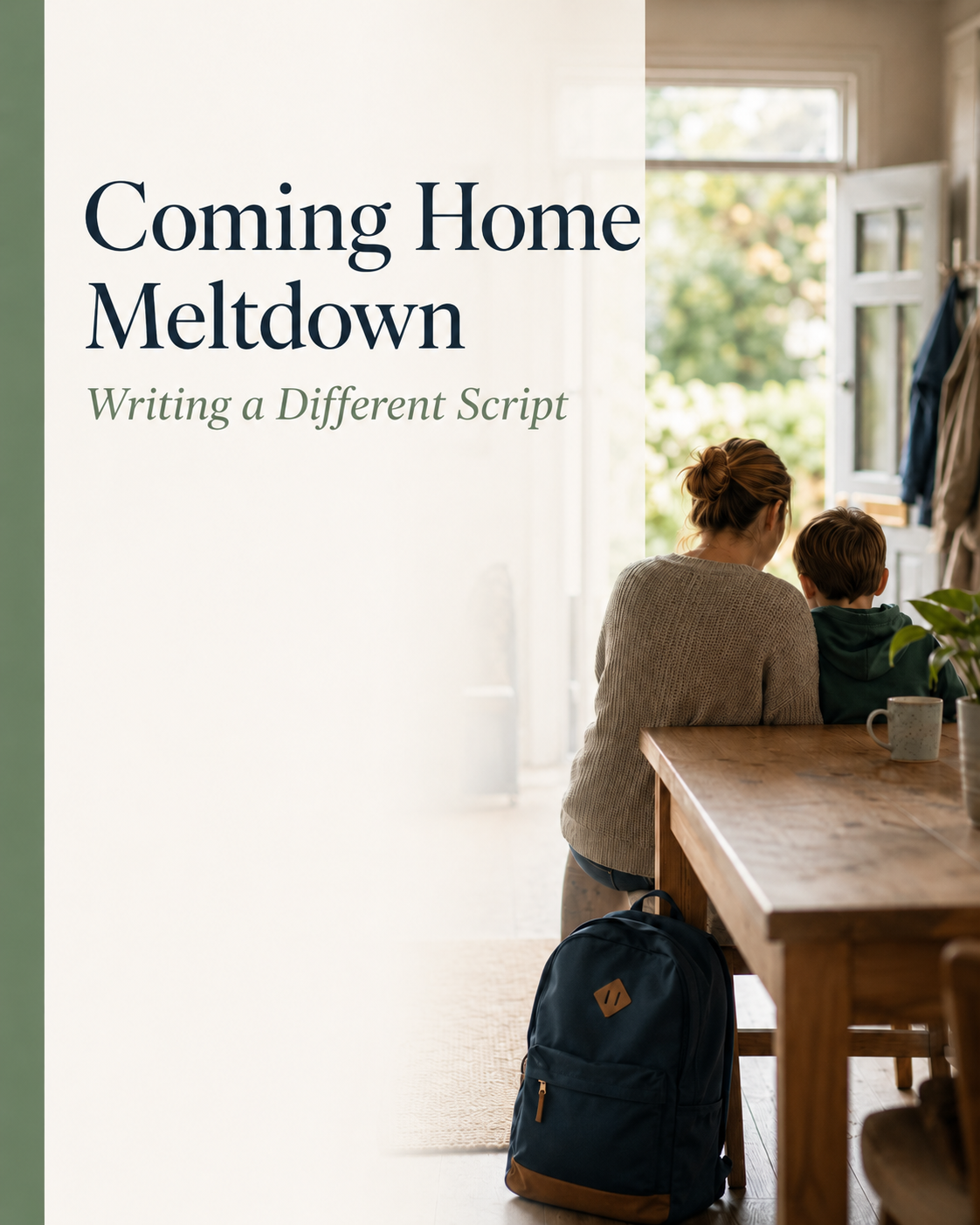
A reset plan for parents whose child holds it together at school and explodes at home. If your child walks out of school looking “fine” and falls apart over shoes, snacks, homework, noise, questions or the wrong cup, this guide gives you a calm starting point for the first 30 minutes after school.
Inside you’ll get: what to do before pickup

This guide covers the middle of primary school, roughly Year 4 to Year 5. It picks up where the early-years guide left off, because ADHD does not stay still. It changes shape as the demands change, and the demands change a great deal around now. Where a point rests on research, you will find a short note showing where it comes from.
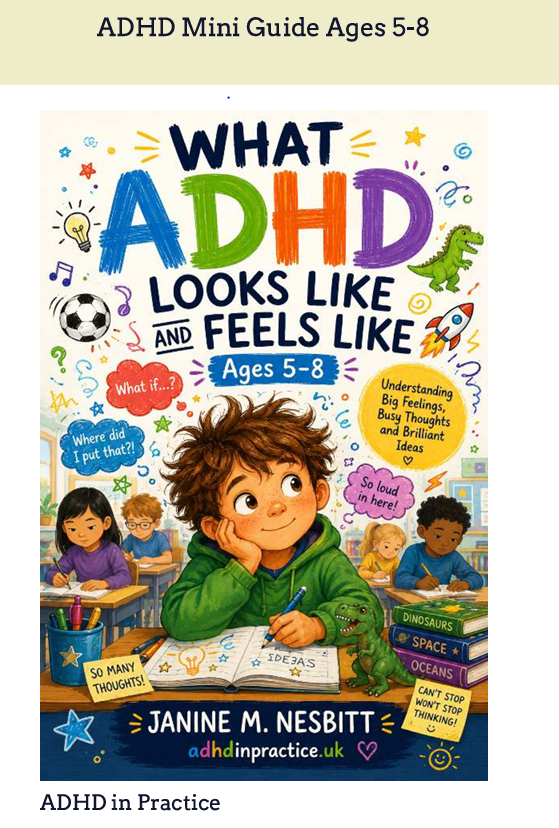
What it looks like. At this age, ADHD often looks like the child who can't sit on the carpet, blurts out, bounces off the walls, or melts down over small things. Or the quiet one who drifts off and gets missed. It gets called naughty, immature or "a handful." It's usually none of those.
What it feels like. Inside, it's a brain with everything turned up at once and no off switch. Big feelings that arrive fast and hard. Knowing the rule but not being able to do it in the moment. Working twice as hard as everyone else, and still being told to try harder.
That gap, between how it looks and how it feels, is where so many little ones get missed.

The 3:45pm Survival Guide is a practical, no-nonsense resource for parents of children with ADHD who seem to hold it together all day at school and then fall apart the moment they get home.
Autism in the Early Years: A Brief Guide for ParentsNursery, reception, and where to find real advice
You've noticed something. Maybe nursery has too. And now you're stuck between "it's probably nothing" and "I need to know who to actually ring."
This is a short, practical guide for parents standing at the start of that conversation — before a diagnosis, sometimes before you're even sure a diagnosis is where this is heading.
Inside, you'll find:
What tends to prompt this conversation (without the checklist-anxiety)
Exactly who you can talk to — health visitor, GP, nursery SENCo, community paediatrician, SALT, Portage, and more — and what each one can actually do
What your nursery is obliged to offer, with or without a diagnosis
How to handle the move into Reception, including funding and support you might not know to ask for
Where to find advice that isn't a forum post at 2am — the National Autistic Society, IPSEA, your local SENDIASS, and more
Written by a former SENCo of 34 years who's since sat on the other side of the table as a parent. No jargon for jargon's sake, no false reassurance, no waiting for a label before you're allowed to ask for help.
Instant download.
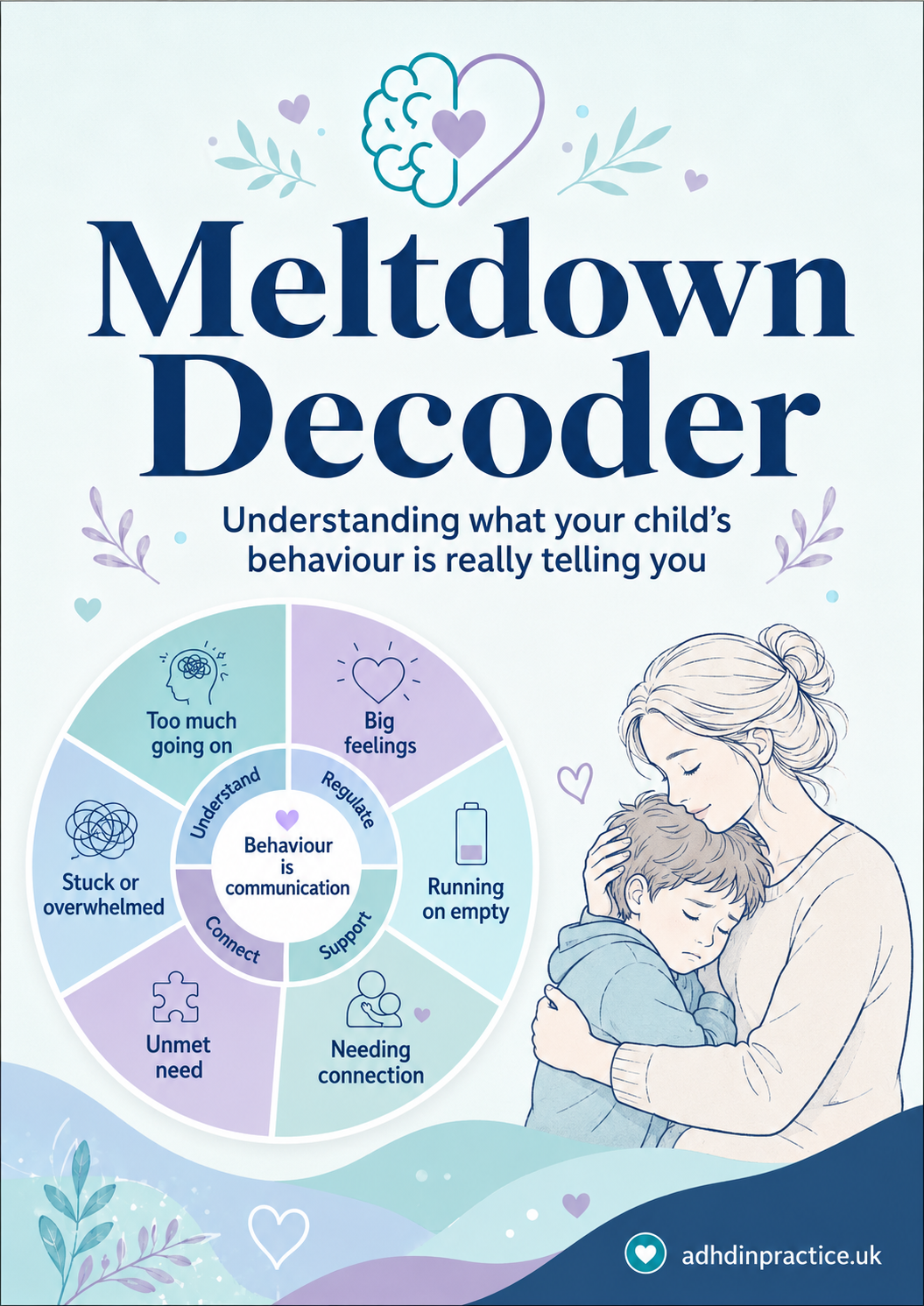
Work out whether your child’s behaviour is demand overload, sensory overwhelm, transition panic, masking collapse, hunger, tiredness, anxiety or executive function overload — before everyone ends up crying in the hallway.
Starting school
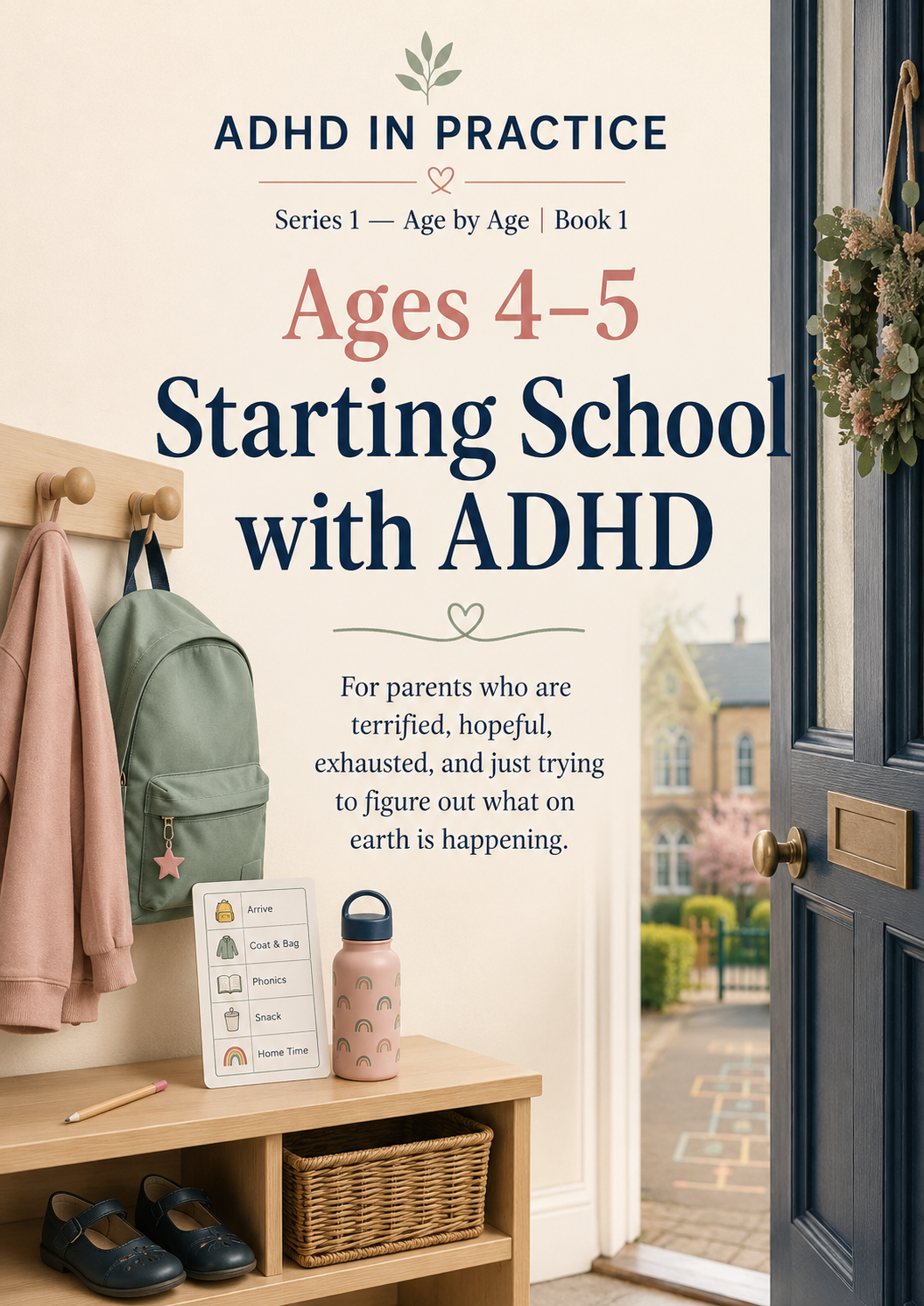
A practical UK parent guide for understanding ADHD in children aged 4–5 as they start nursery, Reception or school.
This guide explains what may be happening beneath the behaviour — from big emotions, impulsivity and after-school meltdowns to turn-taking, transitions, tiredness, sensory overload and the difference between how ADHD can look in boys and girls.
Warm, clear and realistic, it helps parents make sense of the early school years without shame, blame or panic.
For parents who are terrified, hopeful, exhausted — and just trying to work out what on earth is happening.
I’m not weird!
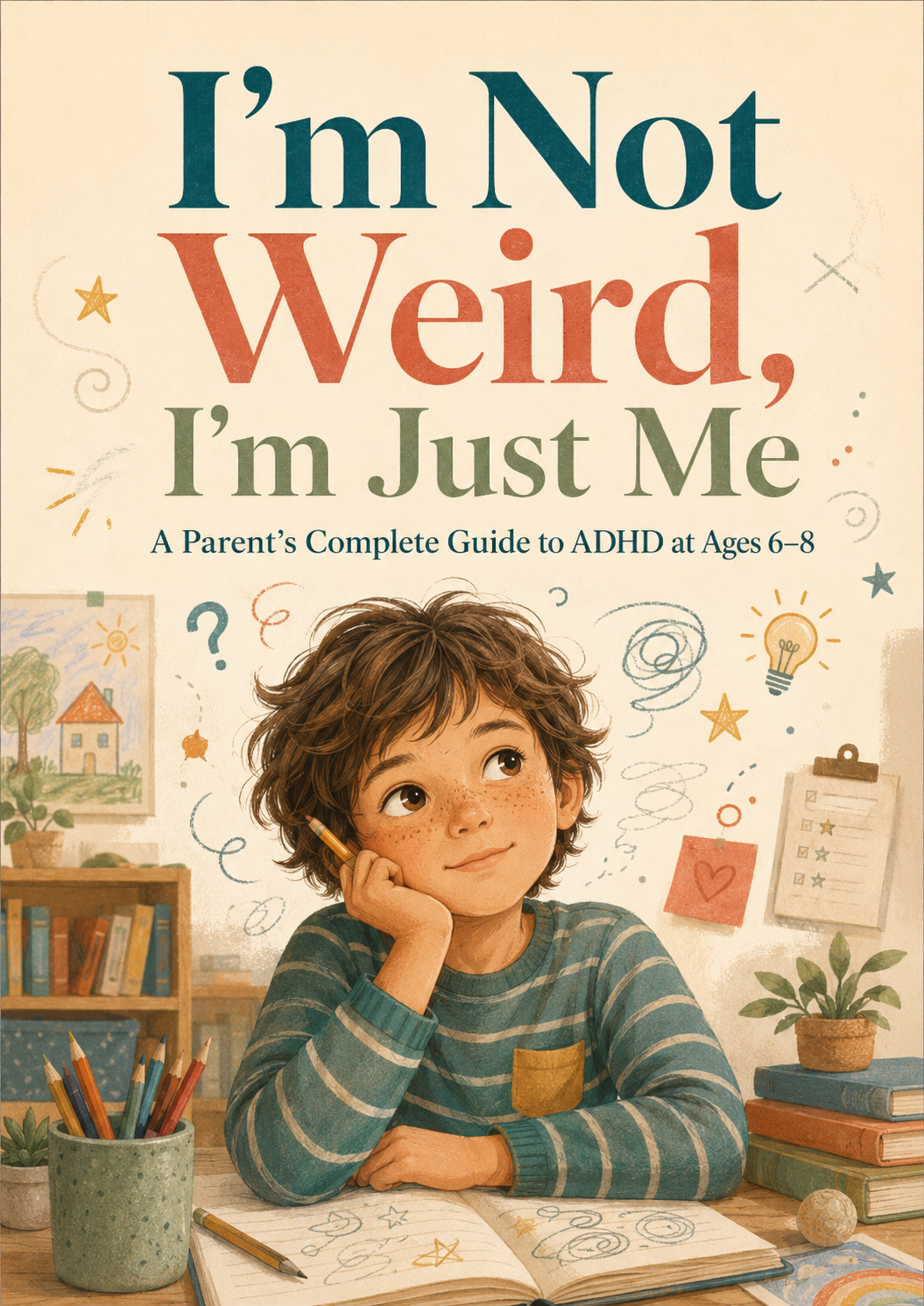
The guide for parents who knew something was different long before anyone else did. 100 pages. Ages 6–8. Five expert voices. UK-specific throughout. Written by a SENCo, a parent, and a late-diagnosed ADHDer who spent thirty-four years on the wrong side of this conversation. You can start right now — before any diagnosis.
ADHD support guides
A downloadable product straight to your computer, tablet or phone. The Mindfulness Toolkit for ADHD families gives you simple, realistic strategies to help your child calm their body, settle their mind and regulate emotions - without expecting stillness, silence or long meditaton sessions.
Designed for busy UK parents, this toolkit includes quick mindfulness exercises, sensory grounding tools, ADHD friendly breathing techniques and easy scripts you can use during meltdowns, transitions or after-school overwhelm. Every activity is short, playful and tailored to how ADHD brains regulate best.
Perfect for parents, carers, teachers and SENDCOs who want practical emotional regulation tools that work in real life - at home, in school or on the go. More products coming soon.
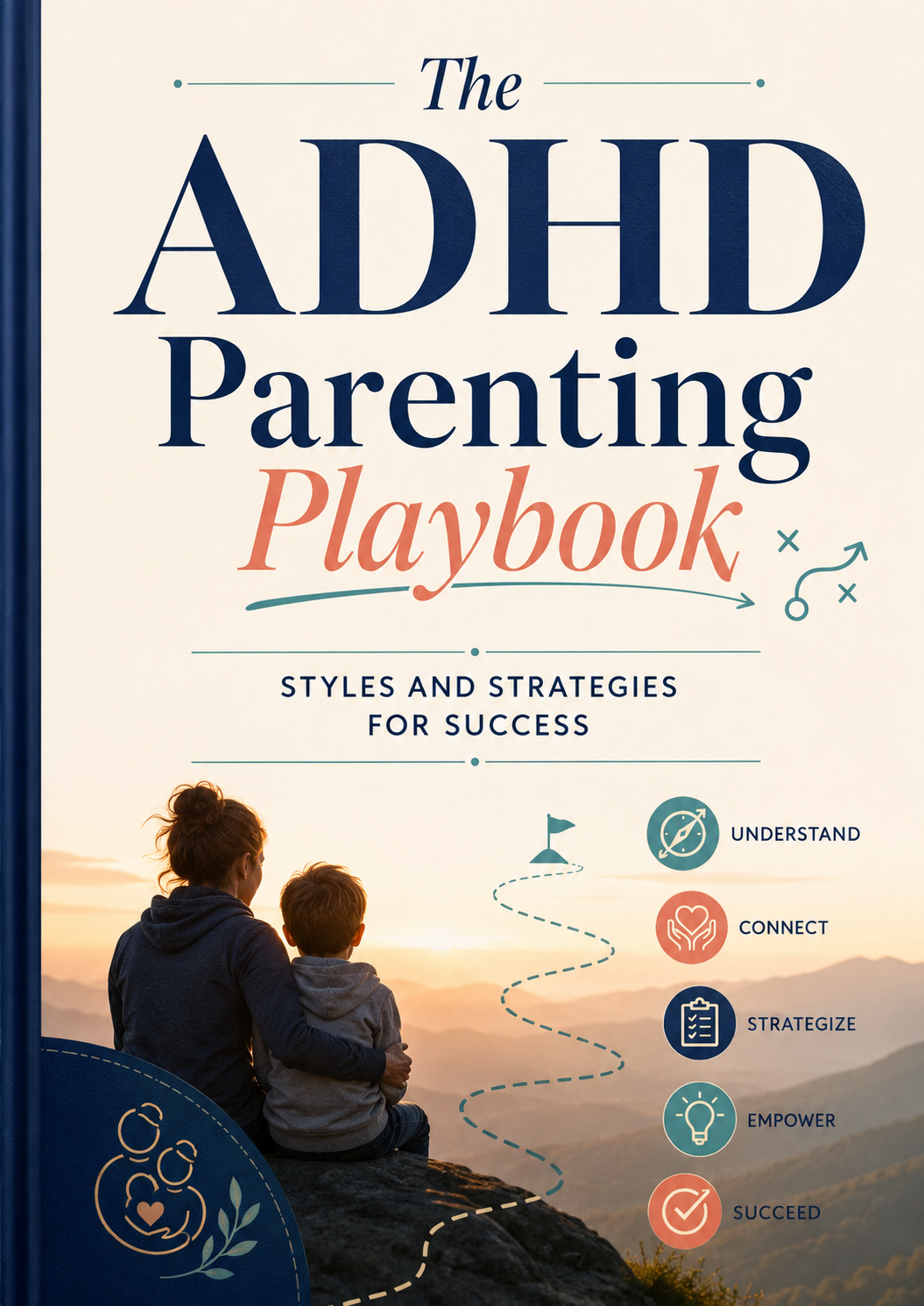
Parenting a child with ADHD can be rewarding, challenging, and sometimes overwhelming. The ADHD Parent Playbook offers practical tools, proven strategies, and compassionate guidance to help parents understand their child's unique needs, build stronger connections, and create a supportive home environment. From managing daily routines to encouraging confidence and resilience, this book provides actionable insights to help families thrive.

Your child is struggling. You can see it. School can see it. You’ve filled in the forms, chased the SENCO, spoken to the GP — and now you’re in the NHS referral queue. A queue nobody warned you about. A queue with no updates, no timeline, and no professional checking in. A queue where your child is expected to “cope” while you wait… and wait… and wait.
Waiting Well is the guide every parent wishes they had the moment the referral goes in.
Inside, you’ll find clear, practical, evidence‑based strategies to help your child thrive during the long months (or years) before assessment — plus the tools you need to stay calm, confident, and informed while navigating a system that often leaves families in the dark.
This book gives you:
A realistic timeline of what the NHS referral process actually looks like
What schools can do now (and how to ask for it)
How to support emotional regulation without a diagnosis
Scripts, templates and checklists for meetings, teachers and GPs
What to track, what to ignore, and what actually matters
How to advocate without burning out
How to prepare for assessment long before you get the appointment
If your child is stuck in the gap between needing help and getting help, this guide shows you exactly how to bridge it.
You don’t have to wait helplessly. You can wait well.
Something does not add up, but you cannot quite explain why
You may be seeing difficult school mornings, after-school meltdowns, shutdowns, anxiety, friendship problems, sensory overload, behaviour changes or a growing gap between what school sees and what happens at home.
The Parent Pattern Snapshot helps you gather those pieces in one place.
It is not a diagnosis tool and it is not a behaviour chart.
It is designed to help you notice what keeps happening, when it happens, what may be increasing the difficulty, what appears to help, and what questions may be useful to ask next.
What you will get
A clearer picture of what is happening
Prompts to spot when and where difficulties show up
Space to compare what school sees with what happens at home
Clues to possible triggers, demands and pressure points
A simple way to record what helps and what makes things harder
Questions to take into conversations with school, the SENCo or your GP
A final “What do I need to ask next?” section to help you move from noticing to action
Who is it for?
This guide may be useful if:
you know something is not quite right but cannot clearly explain the pattern
school says your child is fine, but home sees something very different
you are preparing to speak to a teacher, SENCo, GP or other professional
your child is struggling with school, behaviour, emotions, learning, friendships or sensory demands
you are waiting for assessment and want to start gathering useful information now
you do not yet know whether ADHD, autism, dyslexia, anxiety, sensory differences or another SEND need may be involved
What this guide is not
The Parent Pattern Snapshot does not diagnose ADHD, autism, dyslexia or any other condition.
It does not replace professional assessment, medical advice or school-based support.
Its purpose is simpler and more practical:
to help you notice patterns clearly enough to have better conversations and ask better questions.
How to use it
Complete it over several days rather than trying to remember everything at once.
Look for repetition.
Notice what happens before the difficulty, what your child does, what happens afterwards, and whether the same triggers or demands keep appearing.
Then use the final page to prepare for your next conversation with school, the SENCo, GP or another professional.