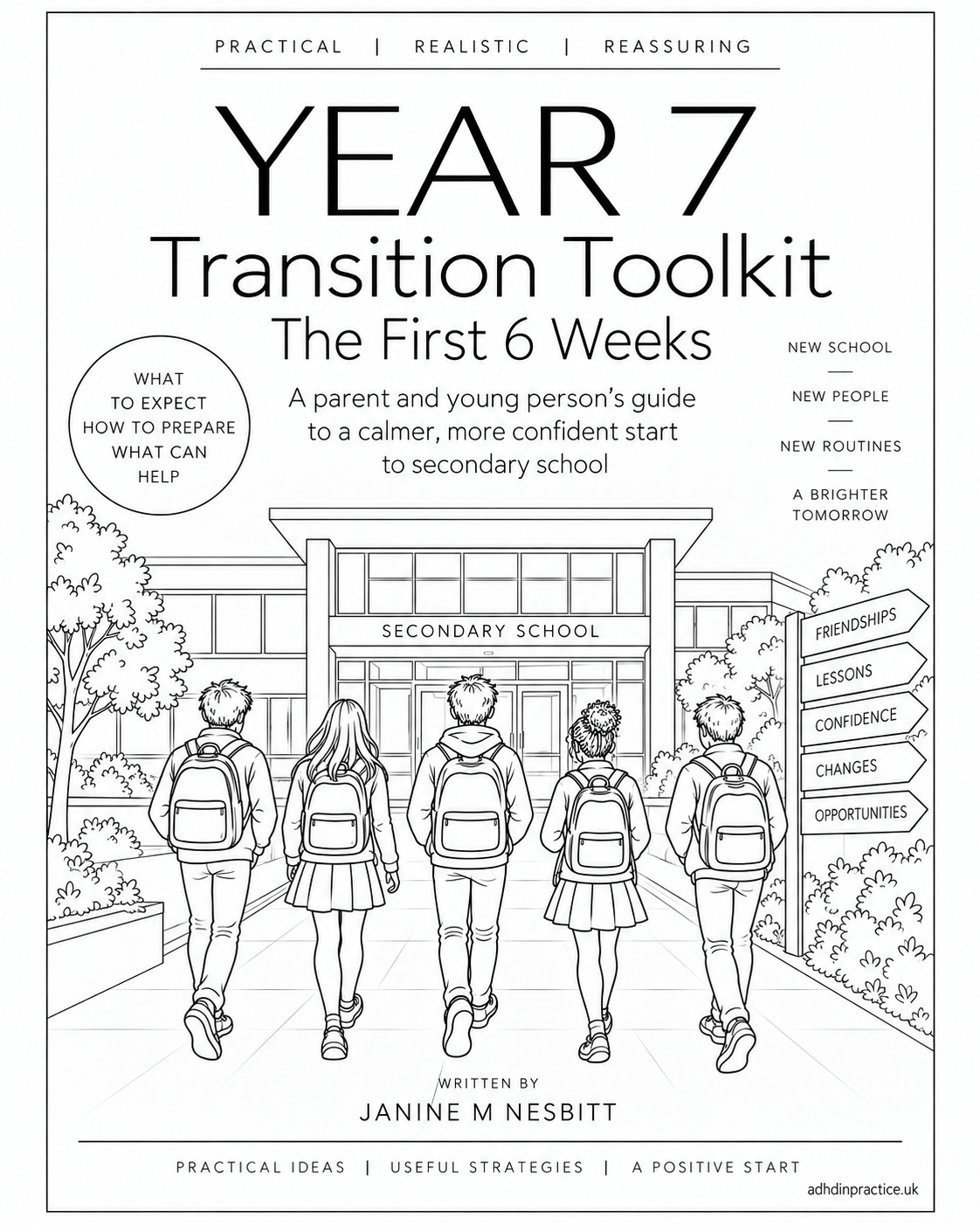
YEAR 7: THE FIRST 6 WEEKS
A practical parent guide to what happens after the first-day photographs.
They have found their classrooms. The uniform has survived. The PE kit is probably somewhere.
And perhaps, from the outside, secondary school seems to be going rather well.
But what happens when your child comes home exhausted, Sunday evenings become difficult or a once-chatty child suddenly has very little to say? Sometimes the first few weeks are not the hardest. The effort of managing new routines, friendships, noise and expectations can build gradually.
This downloadable guide helps you look beyond “They seem fine at school” and work out what might be changing, why it matters and when to ask for support. Without assuming every difficult day is a crisis — or that every difficulty will simply disappear with time.
WHAT YOU'LL EXPLORE
• Why the first six weeks can be more demanding than they appear.
• The hidden effort of coping with timetables, busy corridors and different teachers.
• Organisation, homework, forgotten kit and increasing independence.
• Friendships, lunch and breaktimes, social pressure and feeling left out.
• Anxiety, masking and the child who seems fine at school but unravels at home.
• Tiredness, after-school overwhelm, difficult mornings and Sunday-night worries.
• When to keep observing, when to make adjustments and when to speak to school.
WHO THIS GUIDE IS FOR
Parents and carers of children starting or settling into Year 7, particularly where ADHD, autism, dyslexia, anxiety, sensory needs or other SEND may be part of the picture. No diagnosis is required.
GUIDE OR TOOLKIT — WHAT'S THE DIFFERENCE?
This guide (£12.99) is the understanding part: it helps you recognise what may be happening and consider sensible next steps.
The separate Year 7 Transition Toolkit (£9.99) is the doing part: nine printable tools, ten adaptable parent scripts, trackers and worked examples for recording patterns and planning conversations.
Prefer both? The Complete Pack is £19.99 (saving £2.99 compared with buying them separately).
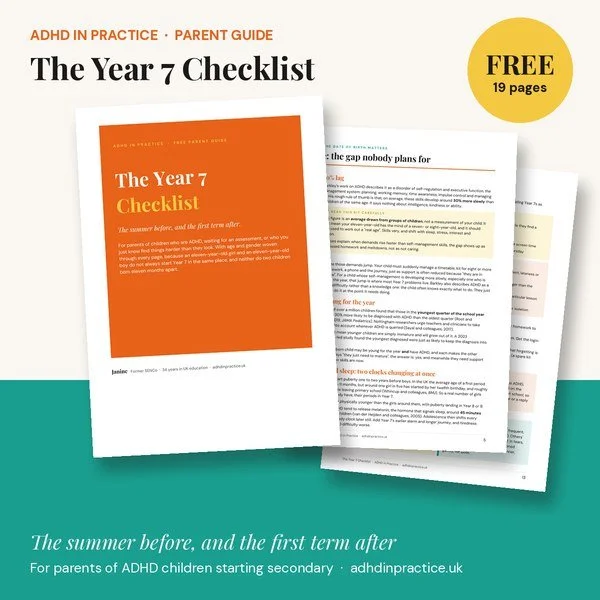
If you are just starting to explore Year 7, there is also a free Year 7 Checklist.
A LAST THOUGHT
A child does not have to be refusing school or falling behind before their experience deserves attention. Equally, one forgotten PE kit is not a catastrophe. The skill lies in noticing the pattern and listening to the child living it.
Digital PDF resource. This guide offers general information, not a diagnosis or an individual assessment.
— Janine M Nesbitt | ADHD in Practice

 Image 1 of 1